You’re making coffee when your cat strolls in, lets out a quick “mrrp,” follows it with a long meow, then suddenly chatters at the window like a tiny, angry typewriter. Same cat, same morning, three totally different sounds. So what’s going on?
Domestic cat sounds aren’t random. Cats use vocal noises to communicate with people, with other cats, and even with prey. The tricky part is that the same sound can mean different things depending on the moment and the body language behind it, like ear position, tail movement, and eye shape.
This guide breaks down common cat vocalizations, what they usually mean, how to respond, and when a sound change might be worth a call to your vet.
Friendly cat sounds that usually mean hello, trust, or a request
 Photo by Aleksandr Nadyojin
Most “everyday” cat noises are social. They’re the sounds you hear around meals, at the front door, or when you sit down after work. In many homes, adult cats meow at humans far more than they meow at other adult cats. It’s like they learned what gets results.
Still, don’t translate a sound without checking the rest of the message. A slow-blinking cat with a gently waving tail “says” something very different than a stiff cat with pinned ears.
A cat sound is a clue, not a full sentence. Pair the noise with posture, timing, and context.
Here’s a quick cheat sheet before we get specific:
| Sound | What it often means | A good human response |
|---|---|---|
| Meow | Greeting, request, complaint | Look for the “ask” (food, play, door, attention) |
| Purr | Contentment or self-soothing | Offer calm contact, then check for stress signs |
| Trill (mrrp) | Friendly hello or “follow me” | Talk back, follow, or offer gentle attention |
For a broader list of vocalizations owners commonly report, see this roundup of cat sounds and what they mean.
Meows, and how pitch and length change the message
A meow is the cat “all-purpose” sound for communicating with people. Think of it like a ringtone. The pattern matters, not just the fact that it happened.
Short, bright meows often show a friendly greeting or a simple request. Many cats do this when you walk into a room or when they circle your legs near the pantry. On the other hand, a long, drawn-out meow can sound more like a complaint. Some cats do this at a closed door, in the car, or when dinner is late.
Pitch can shift the meaning too. Higher sounds often signal excitement or a mild request. Lower tones tend to show frustration or discomfort. That doesn’t mean “low meow equals pain,” but it should make you pay attention.
The bigger clue is change. If your cat suddenly starts meowing much more than usual, note what else changed first: schedule, new pet, new food, litter box location, construction noise, or a move. Then watch for health signs, like reduced appetite, hiding, or trouble using the litter box. If you want a deeper explanation of how cats vary their vocal “levels,” this overview of cat sound categories by mouth position is a helpful framework.
Purring is not always happiness, it can also be self-soothing
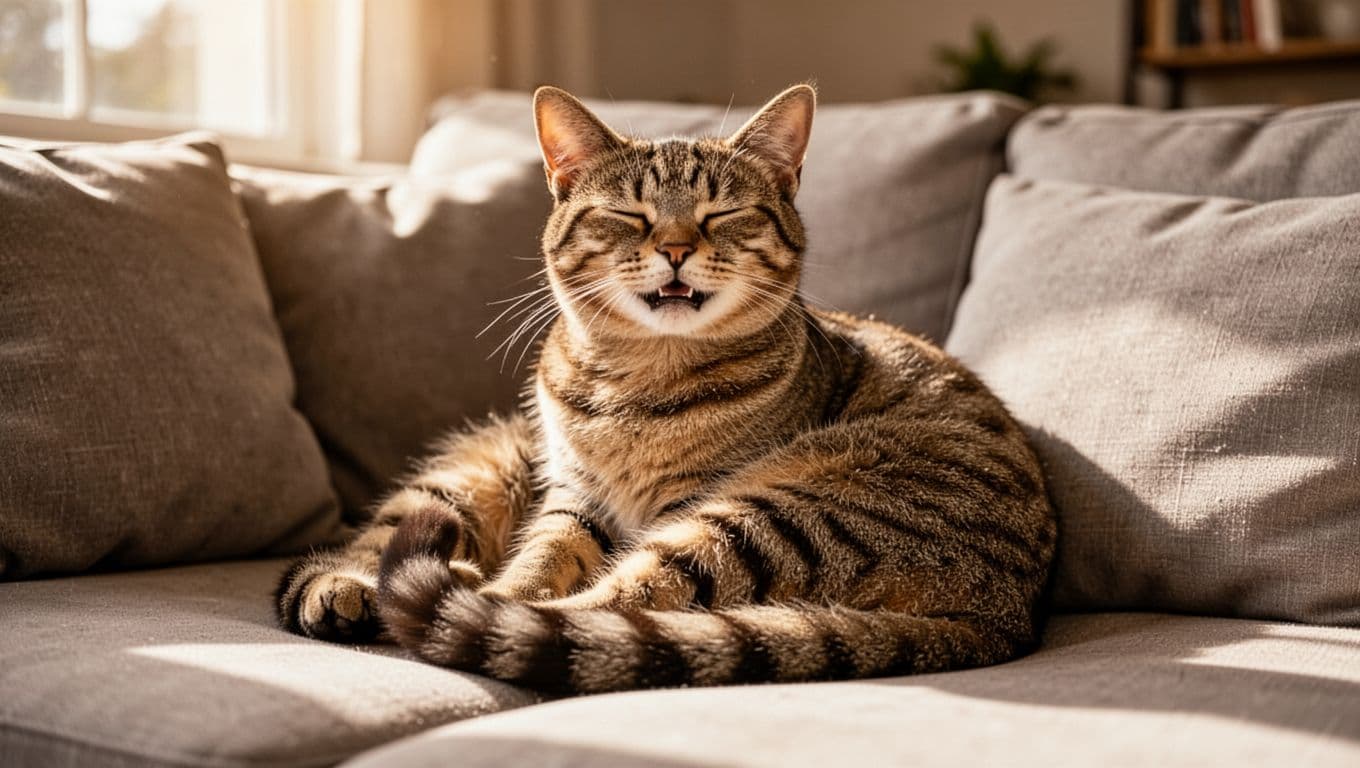
An at-ease house cat purring on a couch, created with AI.
Purring feels like a universal sign of a happy cat. Often, it is. You pet them, they melt, the little motor starts up. Cats can even purr while inhaling and exhaling, which is part of why it sounds so steady.
However, purring can also show self-soothing. Some cats purr when they’re stressed at the vet, after a scare, or when they don’t feel well. The purr alone isn’t the answer. The body tells you the rest.
A comfort purr usually pairs with relaxed muscles, soft eyes, forward ears, and normal eating. A stress or pain purr may come with crouching, hiding, tense belly, or a “don’t touch me” reaction.
Recent research also suggests purrs carry strong individual fingerprints. In a February 2026 study published in Scientific Reports, researchers found purrs were more consistent across situations than meows, making them more useful for identifying an individual cat by sound. You can read the paper, Meows encode less individual information than purrs, if you like the science side.
One more purr you might notice is the “solicitation purr,” a purr mixed with a meow-like tone. Cats often use it at night or near feeding time because it grabs human attention fast.
Trills, chirrups, and soft murmurs that sound like a friendly invitation
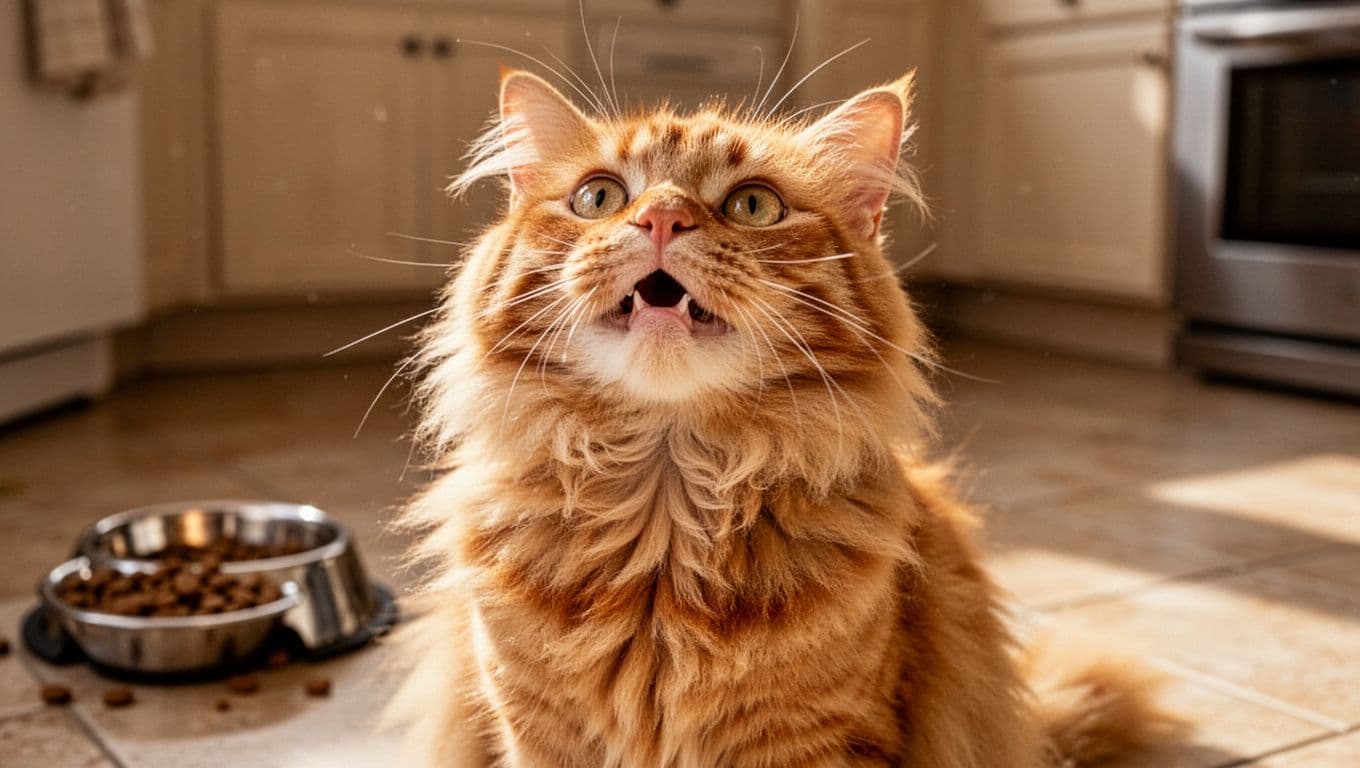
A close-up of a cat making a friendly trill, created with AI.
Trills (often written as “mrrp”) sound like a purr blended with a short meow. Many cats use them as a greeting, a “nice to see you,” or a gentle “come with me.” Mother cats also use similar sounds with kittens, which may be why trills feel so warm and social.
You might also hear tiny, closed-mouth murmurs. These can sound like soft coos or quiet “mm” noises. Some cats do this when they jump up beside you, rub your chin, or settle in. It’s a polite hello, not a demand.
How should you respond? Keep it simple. Talk back in a calm voice. Offer a slow blink. If the cat walks away and looks back, follow them. They may be leading you to a toy, a water bowl, or a favorite window.
If you’re trying to teach your cat that quiet greetings work better than loud meows, reward trills with attention. Give big reactions to calm communication, then save the urgent responses for true needs.
Hunting and excitement noises you might hear at the window or during play
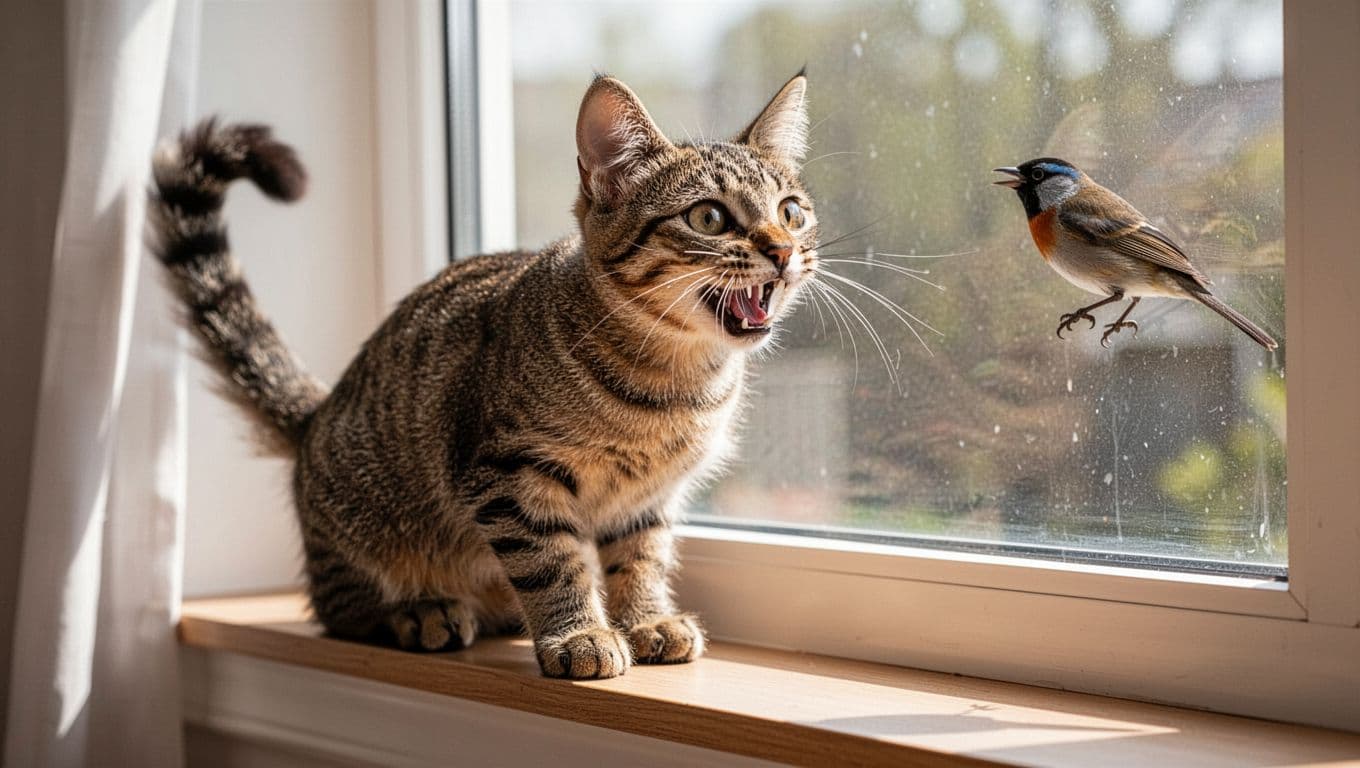
A cat chirping at a bird through a window, created with AI.
Some cat noises feel less “conversation” and more “predator brain.” You’ll often hear them during bird watching, bug stalking, or certain kinds of play, like laser pointers. These sounds are normal in healthy cats. They’re also a good reminder that indoor cats still carry strong hunting instincts.
The downside is frustration. Your cat sees prey but can’t reach it, so the body revs up with nowhere to go. That’s when vocalizations get weird and intense.
If your cat regularly gets worked up at the window, it helps to add a short play session later. You’re basically giving them a safe outlet for the adrenaline.
Chirps, tweets, and bird-like sounds when your cat spots prey
Chirps can sound like quick little squeaks or tiny bird calls. Many cats chirp when they spot birds, squirrels, or even a toy they’re stalking. The sound often comes with forward-facing ears, wide pupils, and a tail that twitches in sharp taps.
Some cats chirp at you, too, especially as a friendly attention-getter. Still, the classic chirp happens at the window, when your cat locks onto a moving target and becomes a statue with whiskers.
To make this energy work for you, add enrichment that matches the hunt sequence: watch, stalk, pounce, catch. Wand toys are great because they let you imitate prey movement. Puzzle feeders help too, since they turn food into a mini “hunt.”
If you want a practical explanation of why cats make those bird-focused sounds, Chewy’s guide on why cats chirp at birds offers good examples and next steps.
Chattering and chittering, the teeth-clicking sound that screams “I want that!”
Chattering (also called chittering) is the rapid jaw or teeth-clicking sound many cats do while staring at prey. It can look like the mouth is trembling. The sound is usually fast, repetitive, and tightly focused.
Why do cats do it? The most common explanation is hunting excitement mixed with frustration. Your cat’s instincts say “grab it now,” but the glass window says “nope.” Some behaviorists also suggest it may be linked to the cat practicing a killing bite, since the jaw is working quickly.
One extra wrinkle: a few cats chatter when they’re overstimulated during petting. If your cat starts clicking their teeth while you pet them, pause. Give them space and let them choose the next move.
For more on this specific window-watching behavior, The Spruce Pets has a clear breakdown of why cats chatter at birds.
Warning and distress sounds that mean stop, back off, or something is wrong
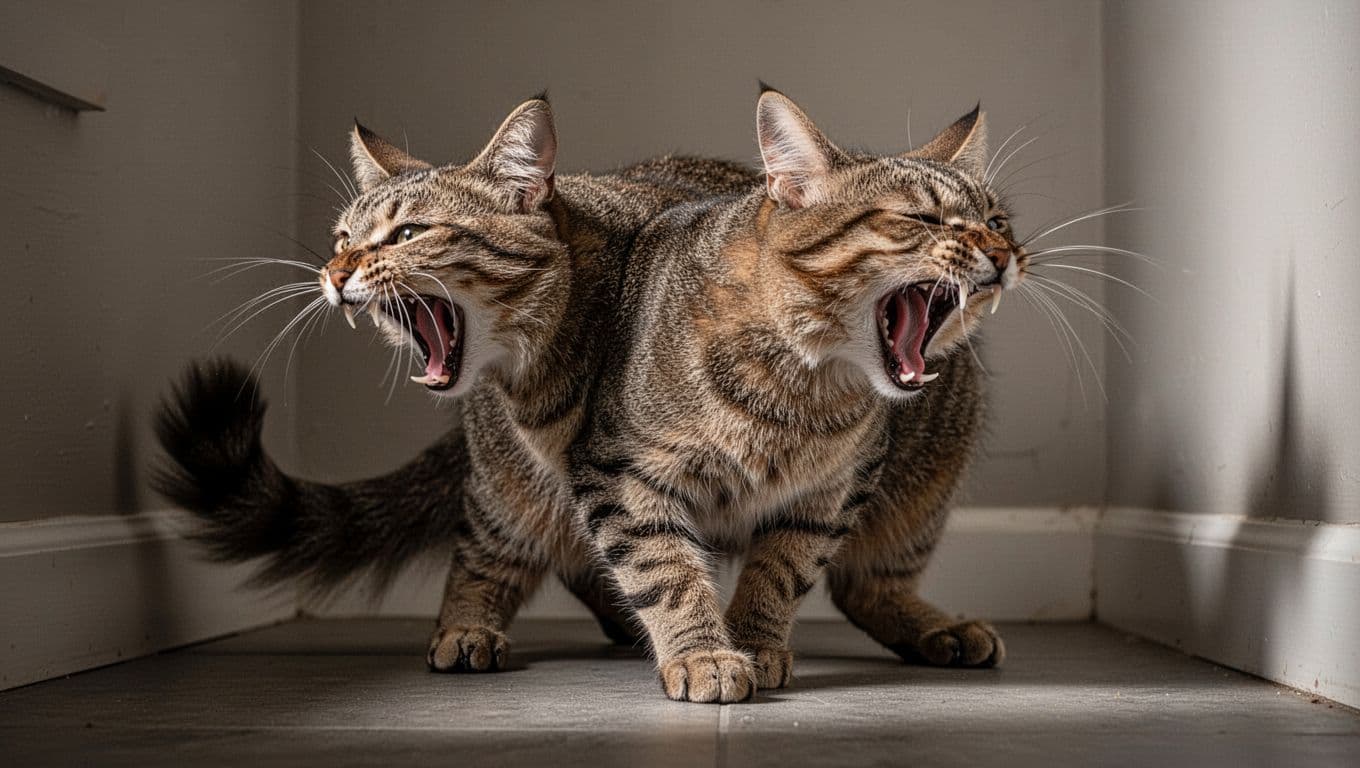
A defensive cat hissing to create distance, created with AI.
When cats feel threatened, cornered, or overwhelmed, their sounds turn into boundary markers. These are the noises that tell you, clearly, “stop now.” They’re also the sounds most likely to lead to bites or scratches if ignored.
In this category, body language matters even more. Watch for flattened ears, a puffed tail, a stiff crouch, hard staring, and a tense mouth. Also notice what happened right before the sound: a new cat in the home, a child chasing, a vacuum, a strange smell, or a painful touch.
Punishing these sounds backfires because it raises fear and removes warning signals. Instead, think de-escalation: distance, calm, and an escape route.
If a cat warns you, believe them. Respecting the warning prevents the next step.
Hissing, spitting, growling, and snarling, the “give me space” toolkit
A hiss is usually the first loud boundary. It’s a sharp burst of air meant to startle and create space. A spit is like the hiss turned up, shorter and more explosive. You might see it when a cat is truly startled.
Growling is different because it’s low and sustained, like a rumbling engine. Cats use it to guard territory, protect a hiding spot, or warn another animal away. A snarl often comes with teeth showing and a tense face. It signals escalation.
In the moment, the safest response is boring and calm:
First, stop moving toward the cat. Next, turn your body slightly sideways and avoid direct staring. Then create distance, even a few steps helps. If you can, block sightlines with a pillow or a chair without trapping the cat. Finally, give the cat a clear exit route.
If two cats are involved, separate them using a barrier (like a baby gate or a door) rather than grabbing either cat. For a longer overview of these aggressive sounds, TICA explains the differences in hisses, yowls, caterwauls, screams, and growls.
Yowls, caterwauls, and screams, loud calls linked to stress, heat, fights, or pain
Yowling is loud, long, and dramatic. It can sound like a drawn-out howl. Cats yowl when they’re stressed, angry, scared, or trying to communicate over distance. During conflicts, yowls can happen right before a chase or a fight. Unspayed or unneutered cats may caterwaul, especially around mating behavior.
Older cats sometimes yowl at night because of confusion or loneliness. They might also do it because their hearing or vision changed, making the house feel less predictable after dark.
Because yowling can tie to health issues, look for patterns and extra signs. Call a vet if intense yowling comes on suddenly, or if it shows up with any of the following: hiding, limping, panting, not eating, vomiting, constipation, or litter box changes.
If you want a vet-written overview of when cat noises can signal a medical problem, PetMD’s guide to cat noises and what they mean is a solid reference.
Conclusion
Cats don’t talk in full sentences, but their sounds carry useful clues. Meows often target humans, purrs can mean comfort or coping, and chirps can show pure hunting excitement. Meanwhile, hisses and yowls are bright warning signs that deserve respect.
Pay attention to your cat’s normal “sound pattern,” then take changes seriously, especially when they come with stress or pain signals. Keep a simple notes log when something seems off (time of day, trigger, body language, appetite), then share it with your vet or a qualified behavior pro if needed. What sound is your cat using most lately, and what do you think they’re asking for?