Your cat meows, stares you down, or gives a quick swat, and you’re left guessing what you did wrong (or what they want). That confusion is common, because cats don’t communicate like we do, and their signals can be subtle until you know what to watch for.
Here’s the helpful twist: adult cats often meow more to humans than to other cats. In other words, your cat may be trying to meet you halfway, using sounds that get your attention when body language alone doesn’t work.
This post will show simple, safe ways to communicate with your cat using sound, body language, touch, play, and steady routines. You’ll learn how to respond without rewarding rude behavior, how to read common cues like tail position and slow blinks, and how to use calm interactions that build trust over time.
Just as important, every cat has personal preferences. Some love being picked up, others hate it, and many change their mind depending on mood, time of day, or stress. You don’t need to be perfect, you just need a consistent approach that helps your cat feel understood.
Start by listening: what your cat’s sounds are really saying
Your cat’s voice is like a doorbell, a thermometer, and a timer all in one. The same sound can mean different things depending on pitch, volume, timing, and context. So before you answer, take one second to notice what’s happening around them, and what their body says too (tail, ears, eyes, and posture).
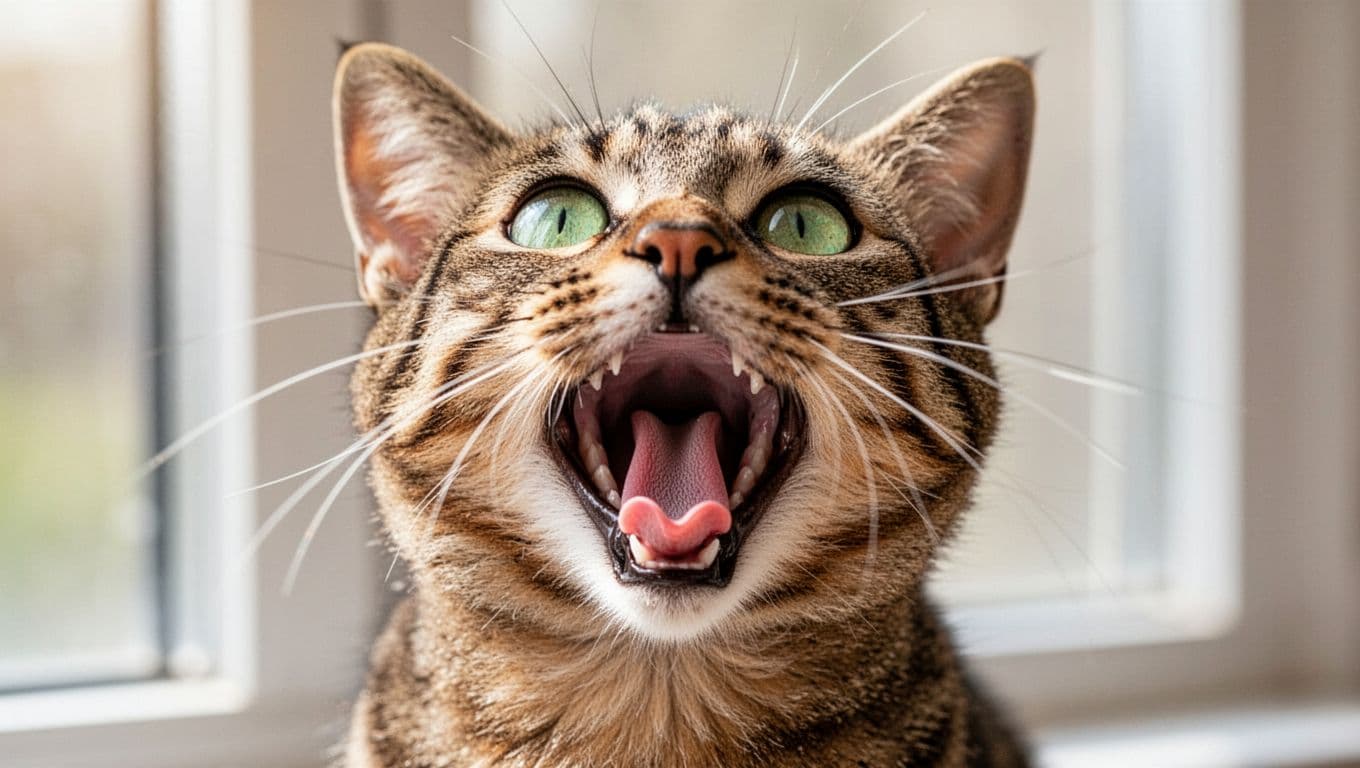 An alert meow often shows up during greetings, requests, or routines, created with AI.
Meows: why they are mostly for humans, and how to answer back
Adult cats don’t meow at each other much. Instead, they save most meows for people because it works. Domestic cats learn fast which sounds make you look up, talk back, or head to the kitchen. Researchers also suggest cats may meow more during greetings, like when you walk in the door, and they can adjust based on how much a caregiver talks. In homes where the person is quieter, some cats turn up the “hey, notice me” behavior. For a deeper explanation of why meowing is so human-focused, see why cats meow at humans.
How you answer matters. Think of your response as a short receipt, not a long conversation. Say a calm phrase, then meet the need if it’s reasonable.
A simple pattern that works for most cats:
- Acknowledge with a short, steady phrase like “Hi, buddy” or “One minute.”
- Check the likely need (food bowl, water, litter box, door, attention).
- Follow through quickly so the sound matches the outcome.
If your cat meows at the food bowl, respond the same way each time: “Dinner,” then prepare the meal. At the door, “Outside?” then open it if it’s safe, or redirect to a window perch.
One important boundary: don’t reward nonstop meowing. If your cat is on a long, loud streak, wait for a two-second pause, then reward the quiet with attention or the requested action. Over time, you teach, “Calm gets results.”
If you can’t stop the meowing, stop paying it on demand. Reward the pause, not the noise.
Purrs, trills, chirps, hisses: the friendly sounds and the warning sounds
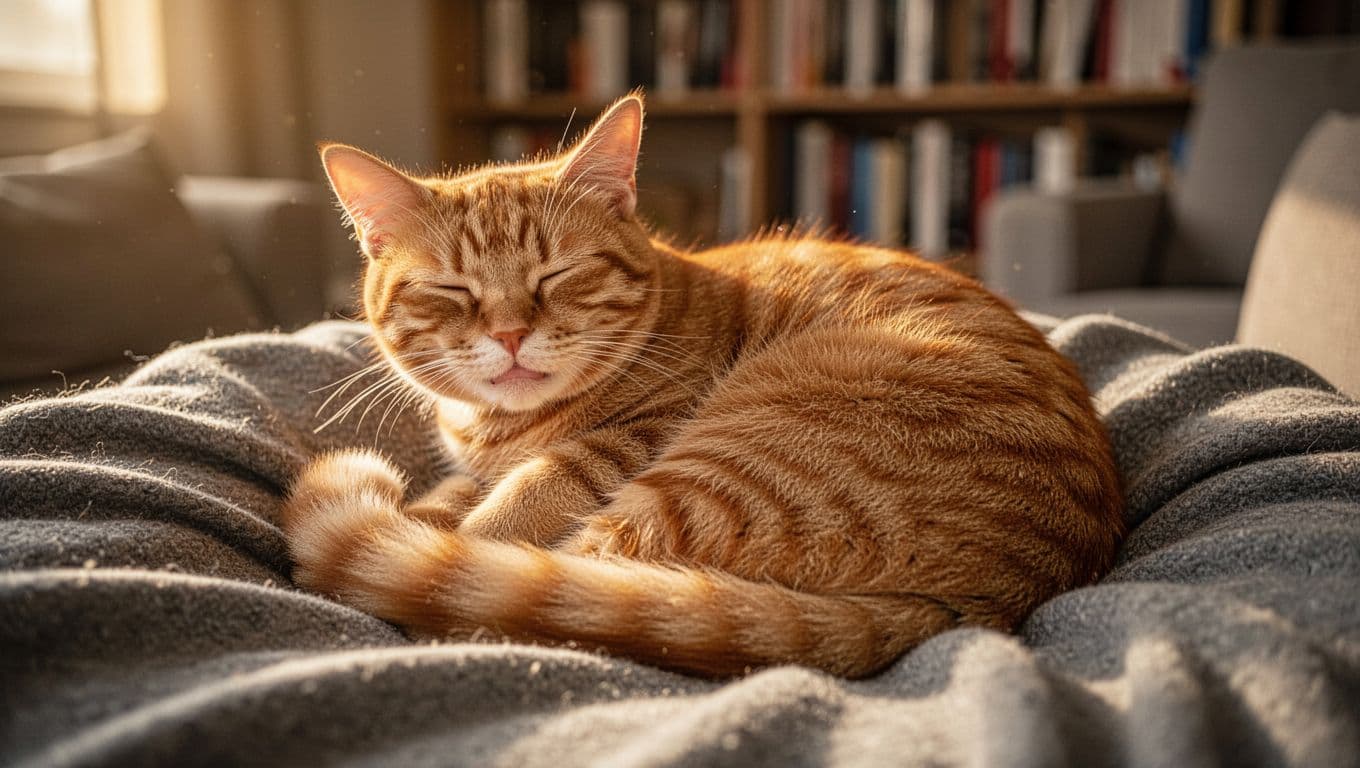 Purring often shows comfort, but context still matters, created with AI.
A purr usually means contentment, like when your cat kneads a blanket or leans into petting. Still, cats also purr to self-soothe, so don’t treat purring as a guaranteed “I’m fine.” If the purr comes with tense shoulders, wide eyes, or a twitching tail, slow down and give space.
Trills are those warm, rolling “brrp” sounds. You’ll often hear them at the door or when you enter a room. It’s basically a friendly greeting, like your cat saying, “Come with me.” Chirps are quicker and sharper, and they often show up during play or bird-watching at the window. If your cat chirps at a wand toy, they’re amped up and engaged.
On the other hand, hissing and growling are not mixed signals. They mean back off. When you hear them, pause immediately. Then create distance and lower the pressure.
Do this instead of arguing with the sound:
- Give your cat space and an escape route.
- Remove the stressor if you can (another pet, a child crowding them, a scary vacuum).
- Avoid punishment, it adds fear and can make warnings disappear.
For a quick refresher on common cat sounds, see cat sounds and what they mean.
Use your voice like a signal: tone, pace, and a few repeatable words
Cats don’t need long sentences. They need patterns they can predict. Pick 3 to 5 consistent words and keep them the same forever. Good options are: food, treat, play, come, and stop.
Tone and pace do most of the work. A soft, even voice feels safe, especially for shy cats. Quick, loud speech can sound like a threat, even when you mean well. If you’re excited, slow your words down anyway.
Try this daily plan:
- Say the word before the action. “Play,” then pick up the wand toy.
- Pair the same word with the same outcome every time. “Come,” then reward with a treat.
- Use “Stop” once, then redirect (toy, scratcher, or moving them away).
Soon your voice becomes a reliable signal, like a familiar ringtone. Your cat won’t understand every word, but they’ll understand what happens next, and that’s what builds trust.
Read the silent messages: body language that tells you “yes,” “no,” and “not sure”
Cats speak in quiet signals that stack up like traffic lights. One cue alone can fool you, but patterns rarely do. When you learn the “green light” (yes), “yellow light” (not sure), and “red light” (no) signs, you stop guessing and your cat stops feeling pushed.
A quick safety note, especially for kids and visitors: treat a cat like a shy friend, not a stuffed animal. If you see yellow or red signals, pause and give space. That simple habit prevents most scratches and bitey moments.
Tail talk made simple: upright tails, twitching tips, and fast swishes
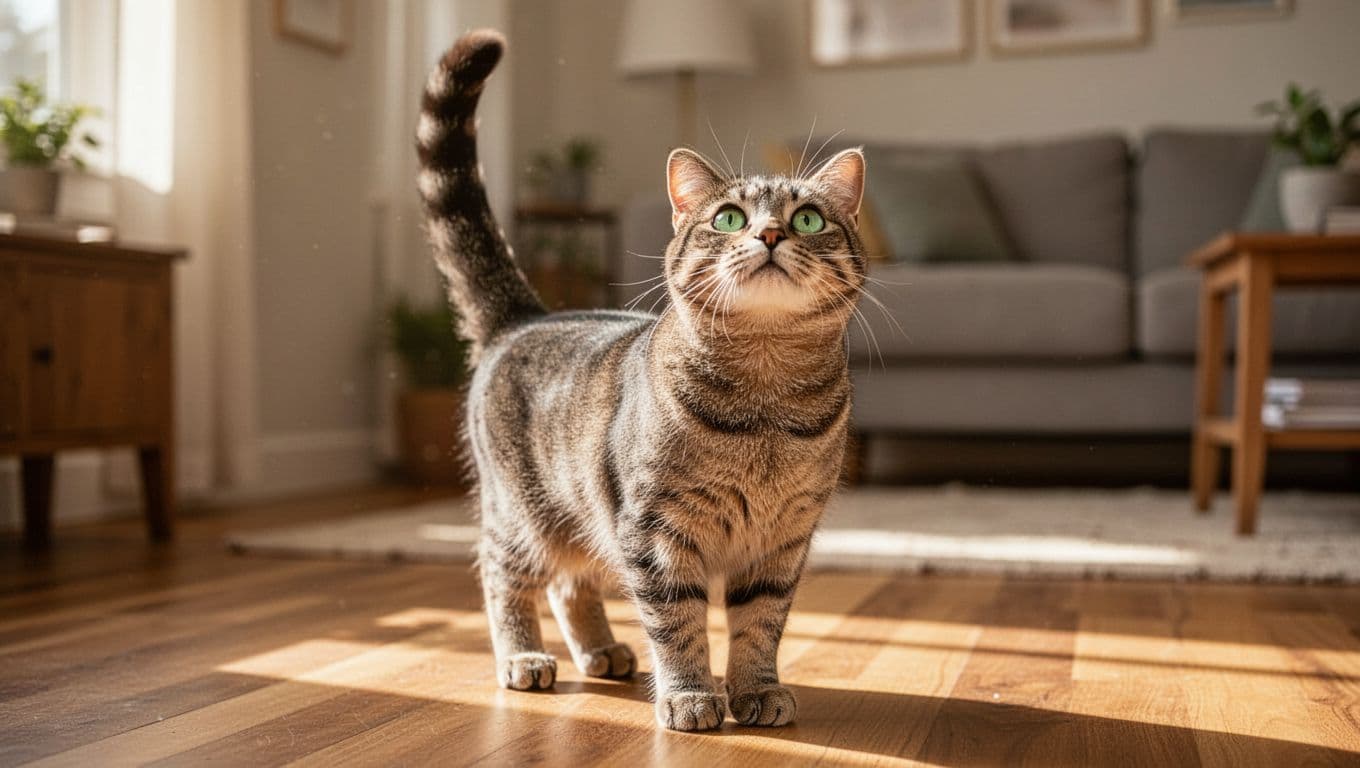 A cat greeting with an upright tail, created with AI.
The easiest “yes” you will ever read is the tail held upright. A relaxed tail-up posture often shows friendly intent and confidence, like your cat saying, “Hi, I know you.” You may also see a soft curve at the tip, plus gentle rubbing on your legs.
Now compare that with two very different tail signals:
- Yellow light: A mostly upright tail with a twitching tip. Your cat is interested but easily irritated. Keep petting light, or switch to a toy.
- Red light: A hard, fast side-to-side swish or thump. That usually means overstimulation or annoyance, even if they walked over to you first.
- Red light (fear): A puffed tail (bottle-brush look). Fear can show up as defense, and the safest move is to create distance.
What to do next depends on the “color”:
- If you see a swish ramping up, pause petting and let your hands go still.
- If your cat puffs up, offer space and keep the room calm (no chasing, no cornering).
- If your cat is restless but not angry, redirect to a toy (wand toy, tossed kicker, or treat puzzle) so they can burn energy without taking it out on your hands.
For more tail, ear, and posture examples in one place, see cat body language basics.
Ears, eyes, and the slow blink: the calm way to say “I’m safe”
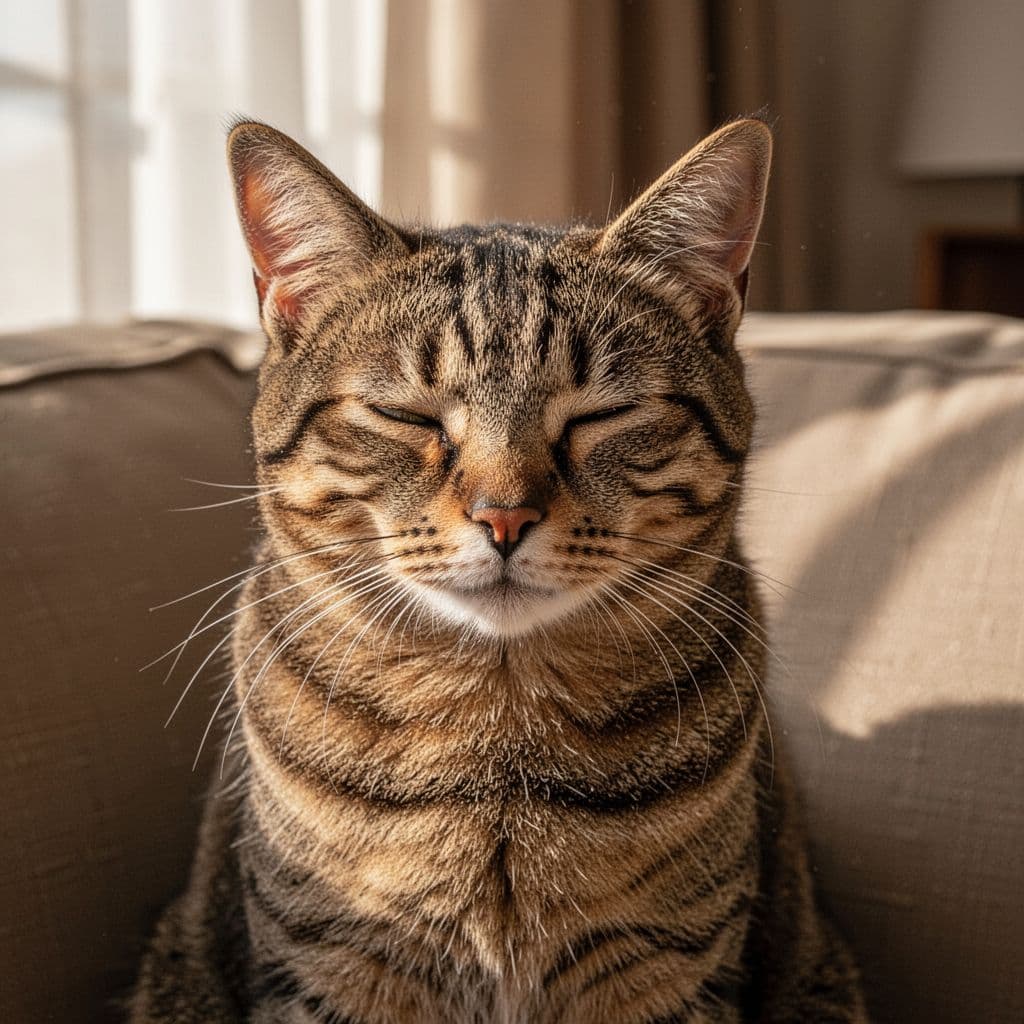 A relaxed slow blink, created with AI.
Ears are mood antennas. They often shift before the rest of the body does.
- Green light (yes): Ears forward and relaxed. Your cat is curious and open to contact.
- Yellow light (not sure): Ears rotated to the side, sometimes called “airplane ears.” Your cat is listening for what happens next, and they are not fully comfortable.
- Red light (no): Ears flattened back tight to the head. That can mean fear or anger, and hands should back off.
Eyes matter too. A hard, unblinking stare can feel like a challenge in cat language. On the other hand, slow blinking is a friendly signal that often shows trust.
You can use a research-backed slow blink technique to communicate “I’m safe”:
- Soften your face and shoulders.
- Slowly close your eyes, then open them.
- Look slightly away (not a sharp head turn, just reduce pressure).
- Wait quietly and let your cat choose to approach.
If your cat slow blinks back, take it as a green light to stay calm and let them set the pace. For the science behind this behavior, read slow blink research in cats.
Posture and space: how to tell when your cat wants company or wants distance
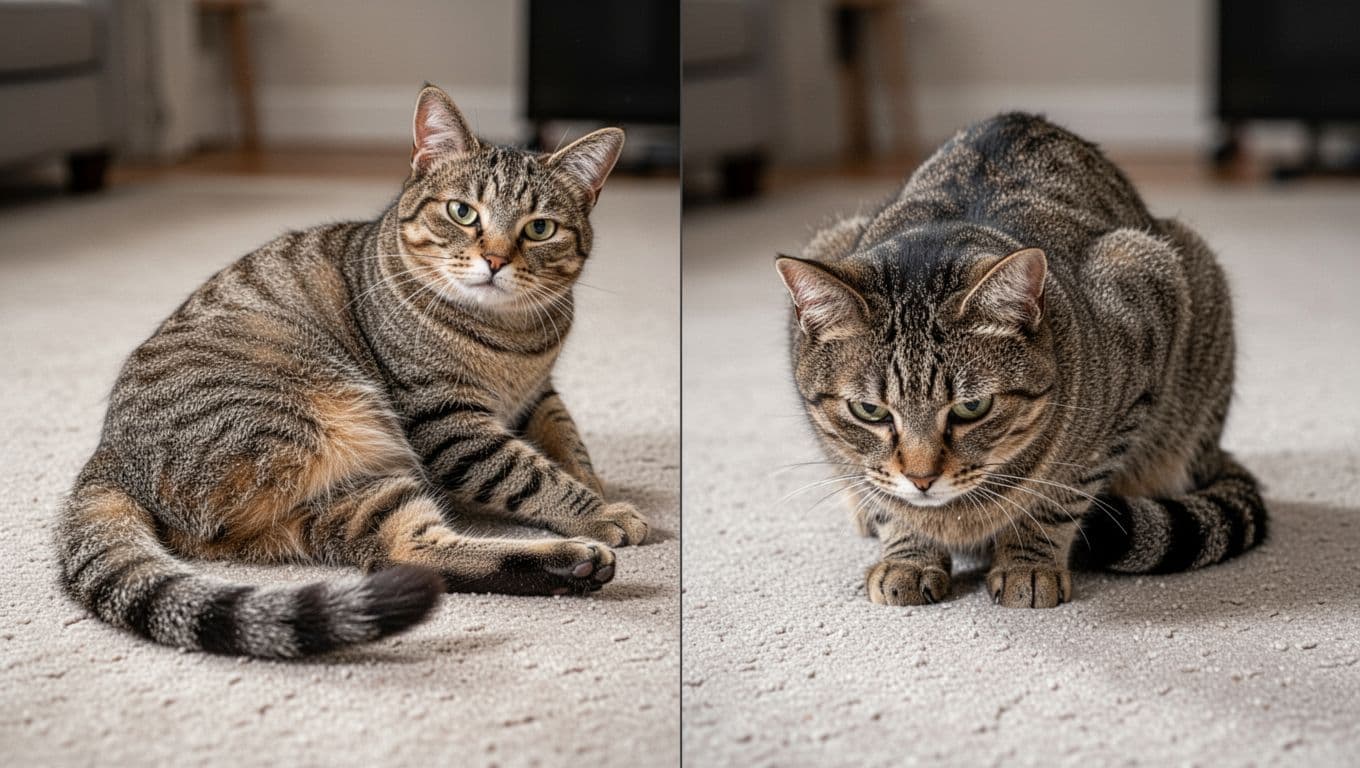 Relaxed vs. stressed posture side by side, created with AI.
A comfortable cat looks like they have “soft edges.” Muscles stay loose, the body may turn sideways, and they approach you with normal, unhurried steps. A friendly cat also gives you options, like sitting near you instead of directly under your hands.
Stress changes the whole silhouette. Watch for crouching, hiding, freezing, or moving low to the ground. Those are red or yellow signals, depending on intensity. If your cat freezes when you reach out, assume “no,” even if they are silent.
Here’s a simple visitor script you can use for adults and kids:
- Sit down and turn your body slightly sideways.
- Hold out one finger at a comfortable distance (do not push it toward their face).
- Avoid reaching over the head.
- Let the cat decide to sniff, rub, or walk away.
Kids do best with one rule: “If the cat comes to you, you can pet. If not, you can talk softly and watch.”
Spot overstimulation early so petting does not turn into a bite
Overstimulation often looks like affection, until it doesn’t. Many cats enjoy touch in short bursts, then their nerves hit a limit. That’s when a “love bite” or sudden swat happens.
Catch the early signs and stop while you are still on good terms:
- Skin twitching along the back
- Tail tip flicks that get faster
- Sudden head turns toward your hand
- Ears rotating back
- Purring stops abruptly
- Your cat leans away or shifts their weight to leave
Use one simple rule: end petting on a good note. Give two or three gentle strokes, then pause. If your cat stays loose and asks for more (leans in, head-buts, relaxed tail), you can continue. If they stiffen or flick their tail, stop and offer space.
For sensitive cats, short sessions work best. Reward calm behavior with a treat after petting, so your cat learns that relaxing, not biting, ends the interaction.
Build trust through touch, scent, and respectful boundaries
Touch is powerful for cats, but it only works when it feels chosen. The fastest way to build trust is to let your cat set the pace, then match their comfort level. Scent matters just as much as petting, because cats use it like a familiar “signature” that says, you’re safe here.
As you practice consent-based handling, keep one health rule in mind. If your cat suddenly flinches, hides, or snaps during normal touch, don’t chalk it up to attitude. A fast change can signal pain or skin sensitivity, so call your vet and describe what changed and when.
Let your cat “mark” you: rubbing, head bunting, and what it means
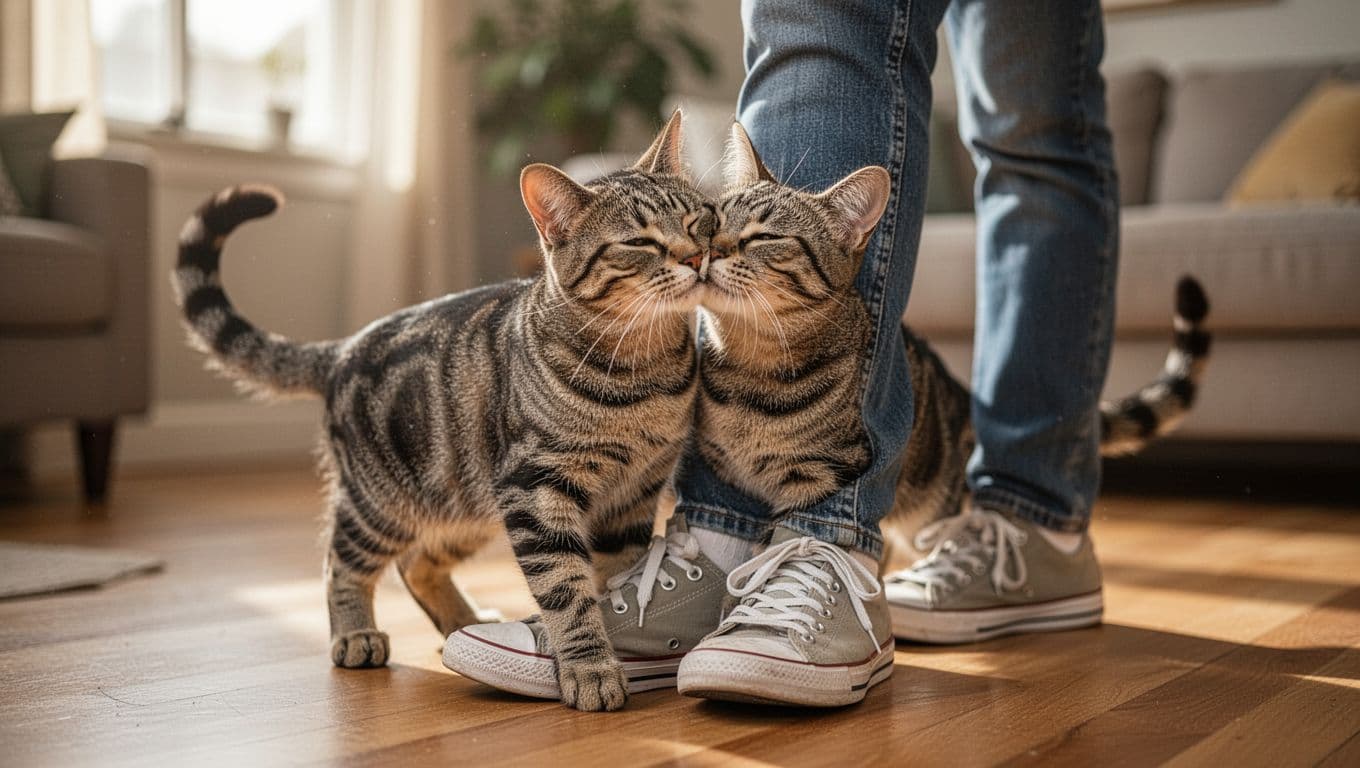 A cat rubs its cheek on a person’s leg during a friendly greeting, created with AI.
When your cat rubs their cheek on your leg or “bonks” you with their head, they are not being pushy. They are bonding. Cats have scent glands in several spots (cheeks, forehead, chin, lips, paws, and along the body). When they rub, they leave pheromones that signal comfort and familiarity.
Think of it like your cat putting a small sticky note on you that says, part of my safe circle. This is also why cats rub furniture and doorways. They are organizing the home with a comforting scent map. For a clear breakdown of how this works, see feline scent-marking communication.
Your best response is simple and calm:
- Stay still for a moment, so your cat can finish the rub.
- Speak softly in a steady tone, because loud praise can startle them.
- Return a few gentle pets in favorite spots (usually cheeks, chin, or the top of the head).
Avoid grabbing, scooping, or hugging right after a head bunt. Your cat offered a friendly handshake, not an invitation to be carried around.
Let the rub “land.” If you rush the moment, you teach your cat that affection leads to pressure.
Where most cats like to be petted, and the places that often trigger stress
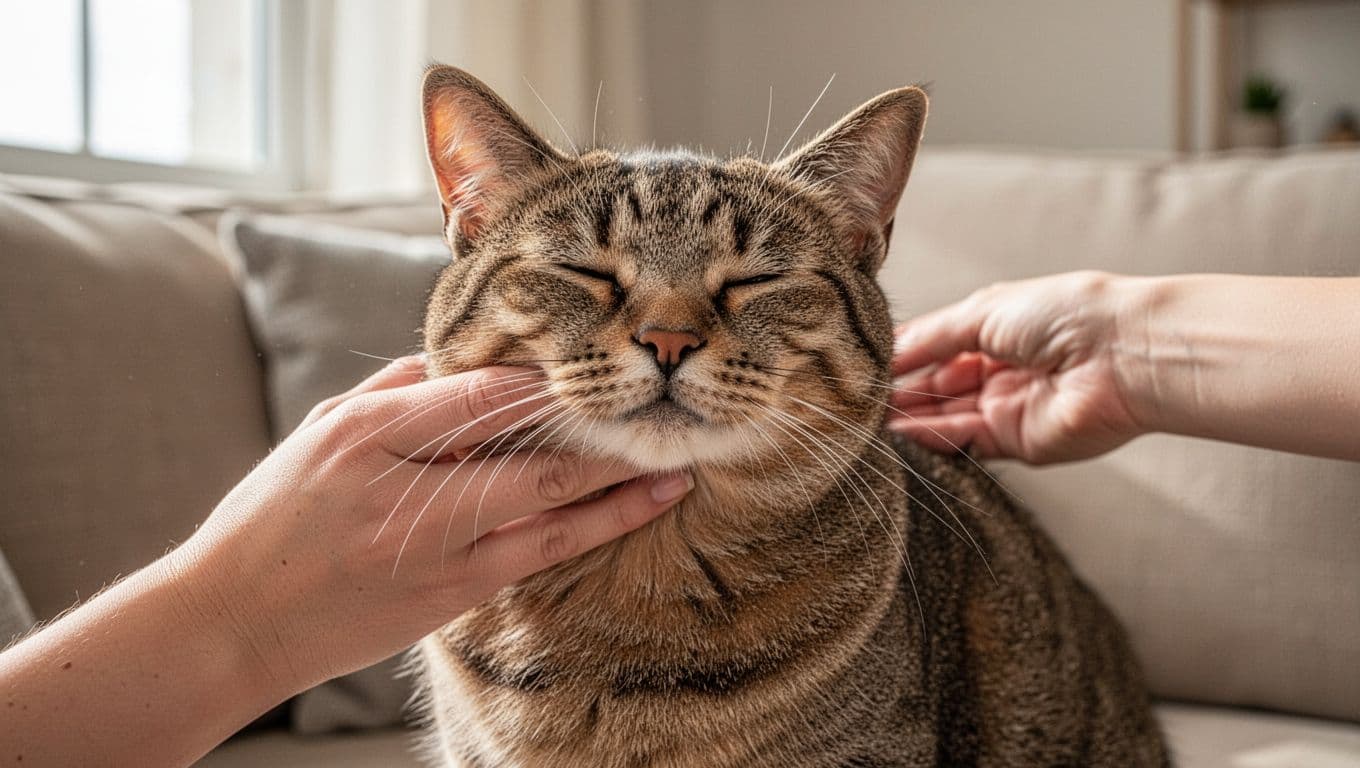 Gentle cheek and chin pets often feel safest for many cats, created with AI.
Most cats prefer petting where they already rub to share scent. Start with cheeks, chin, and between the ears, then try short strokes down the neck and along the back. Keep your hand slow and predictable, and pet with the fur direction. Two or three strokes, then pause, works better than a long nonstop session.
On the other hand, common “maybe not” zones include the belly, paws, and the base of the tail (some cats love it, others get overstimulated fast). These areas can feel vulnerable, or they can trigger a reflexy “too much” response.
Instead of guessing, watch for yellow-light signals that say, “I’m not sure”:
- Skin twitching along the back
- Tail tip flicking, then speeding up
- Ears rotating sideways
- Tense shoulders, even if purring continues
- Head turning toward your hand like they are tracking it
If you see any of these, stop moving your hand and let your cat choose the next step. For a practical guide to safe petting, check how to pet a cat correctly.
Handling basics: how to pick up a cat only when it feels safe
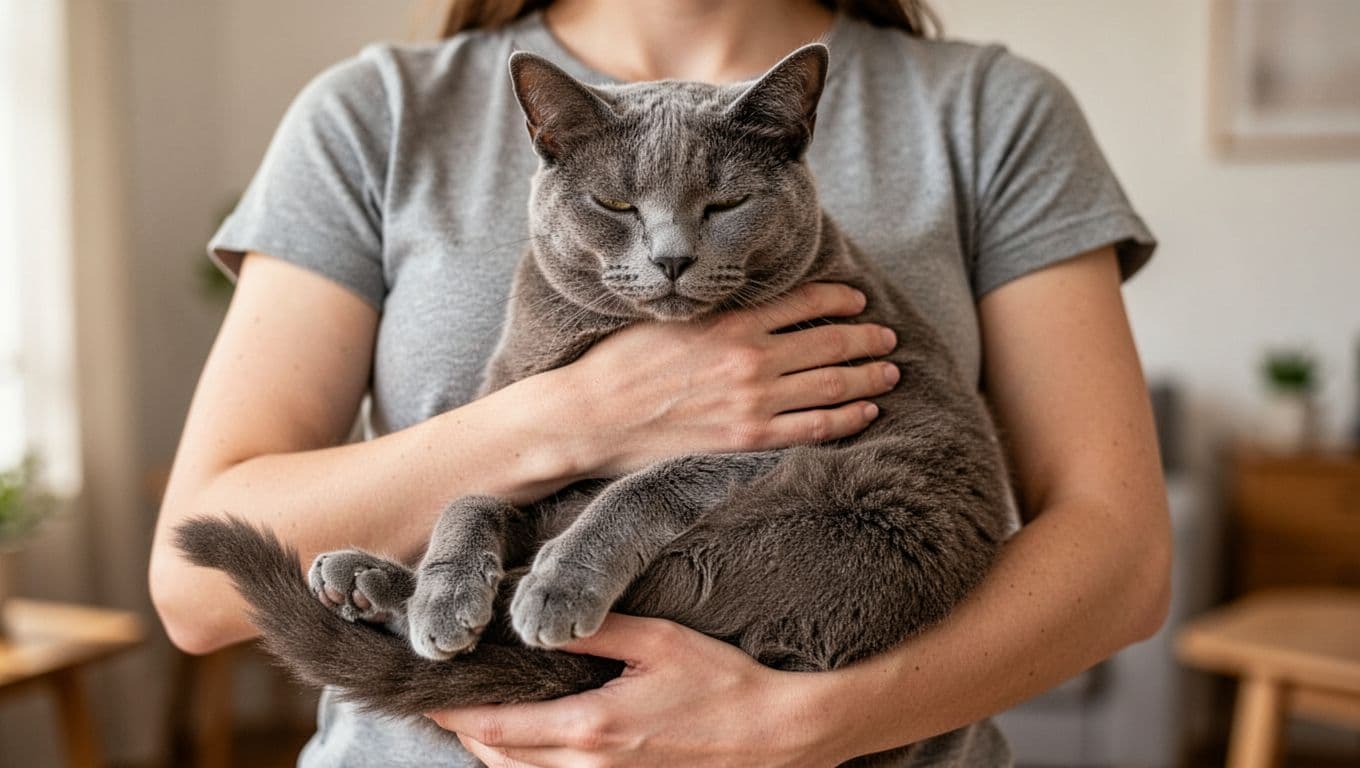 A secure hold supports the chest and hind end, created with AI.
A lot of cats don’t enjoy being picked up, even if they love you. Being lifted removes control and can trigger panic. So treat “pickup” like a skill your cat can opt into, not a default way to show affection.
If your cat does allow it, keep it short and supportive:
- Approach calmly and pet first, so you’re not grabbing out of nowhere.
- Slide one hand under the chest, behind the front legs.
- Use your other hand to support the hind end.
- Hold your cat close to your body, because dangling feels scary.
- Count to two, then to five, then set down gently before they protest.
The boundary is non-negotiable: if your cat stiffens, squirms, growls, or struggles, stop. Lower them right away, then connect in a different way, like wand play, a tossed treat, or simply sitting nearby. If your cat suddenly starts reacting to touch or pickups they used to tolerate, schedule a vet check since pain (including dental pain, arthritis, or skin issues) can make handling feel awful fast.
Communicate through play, routines, and training your cat can actually enjoy
If you want better “conversations” with your cat, focus on what makes sense in cat terms: hunt-style play, clear rewards, and predictable daily rhythms. These aren’t fancy tricks. They’re low-cost habits that help your cat feel safe, seen, and less pushy about getting your attention.
Play as a conversation: “stalk, chase, catch” and why it matters
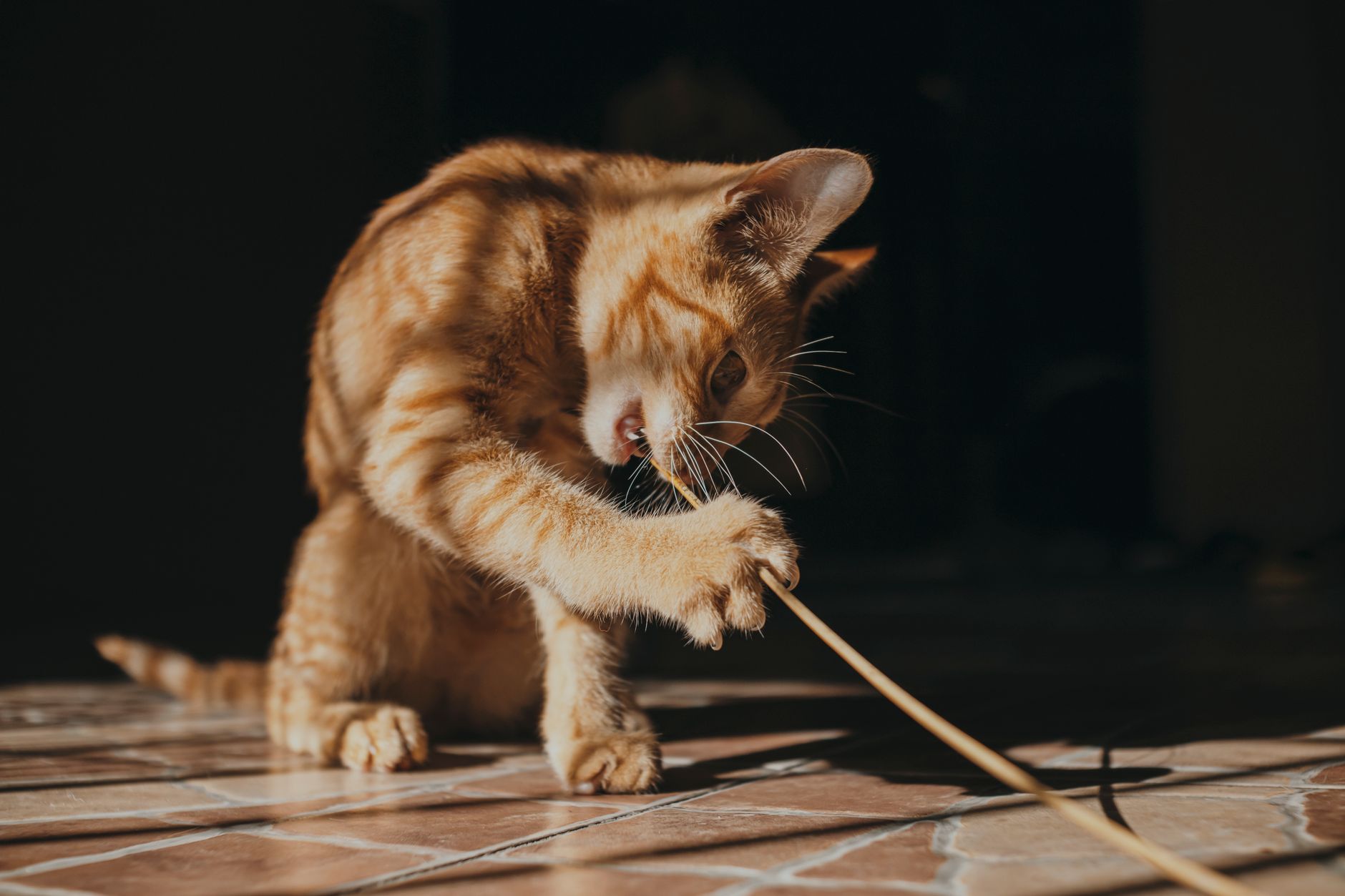 Photo by Nothing Ahead
Play is your cat’s most natural language, because it taps into hunting needs. When those needs go unmet, many cats “hunt” you instead, with ankle bites, rough play, zoomies, and loud nighttime antics. Regular interactive play gives that energy a target, so your hands and feet stay out of the job.
A good session follows the same pattern your cat is wired for: stalk, chase, catch. That’s why wand toys work so well. You can make the “prey” skitter away, hide behind a chair, then pause so your cat can pounce. In other words, you’re not just burning calories, you’re giving your cat a clear story they understand.
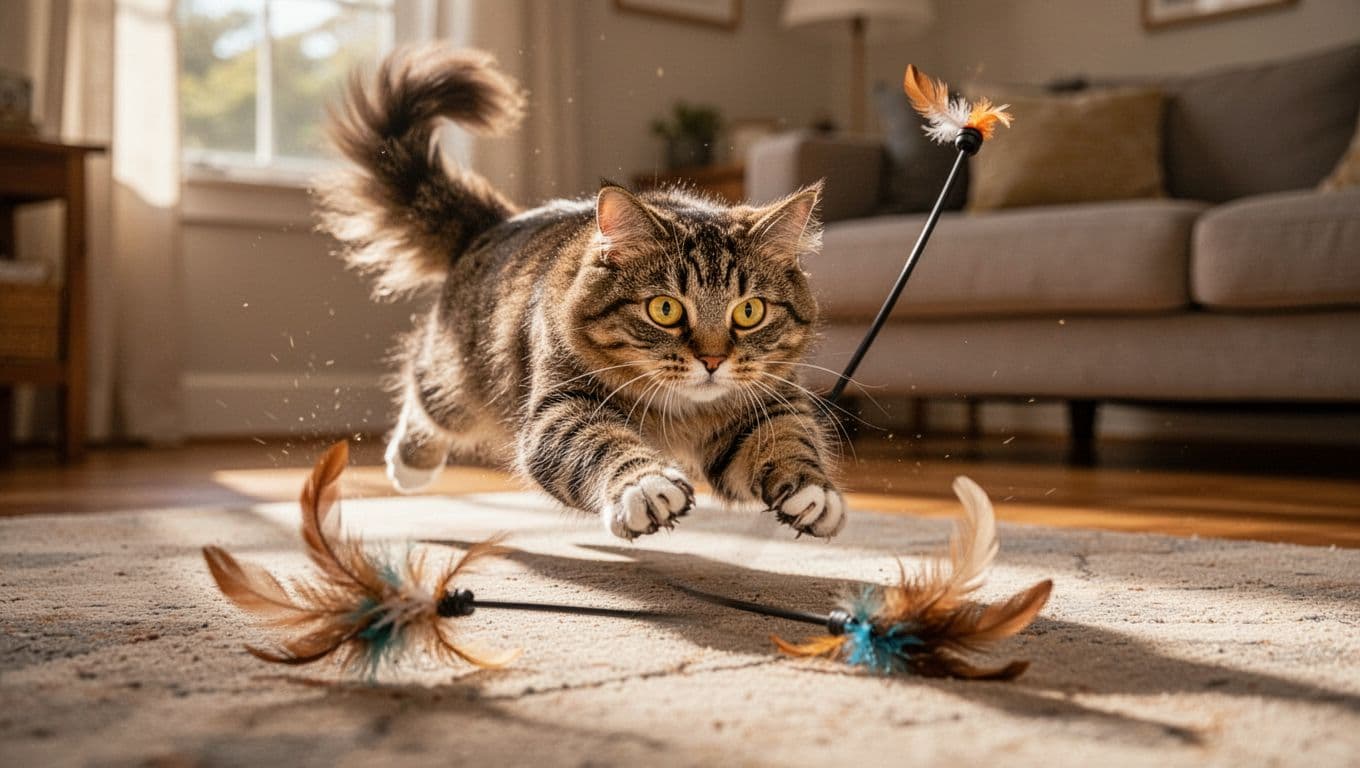 Interactive play that mimics a hunt, created with AI.
Keep it simple:
- Aim for 5 to 10 minutes, 1 to 3 times a day.
- Use wand toys for chase and pounce, plus small tossed toys (like mice or crinkle balls) for “capture” wins.
- Let your cat catch the toy at the end, then offer a small treat or part of a meal. That “eat” step helps complete the cycle and often leads to calmer behavior after.
If your cat gets wild during play, slow the movement and keep the toy away from hands. For more help with overexcited cats, see San Diego Humane Society’s tips for energetic cats.
Simple training with treats: target, come, and “go to your spot”
Training sounds like a dog thing, but cats learn fast when the deal is fair. The rule is: reward what you want, skip punishment. Punishment creates fear, and fearful cats either hide more or act tougher.
Start with treats your cat loves, pea-sized. Keep sessions short, about 1 to 3 minutes, and quit while your cat still wants more. You can use a clicker if you like, but a consistent marker word like “yes” works just as well, as long as you say it the instant your cat succeeds.
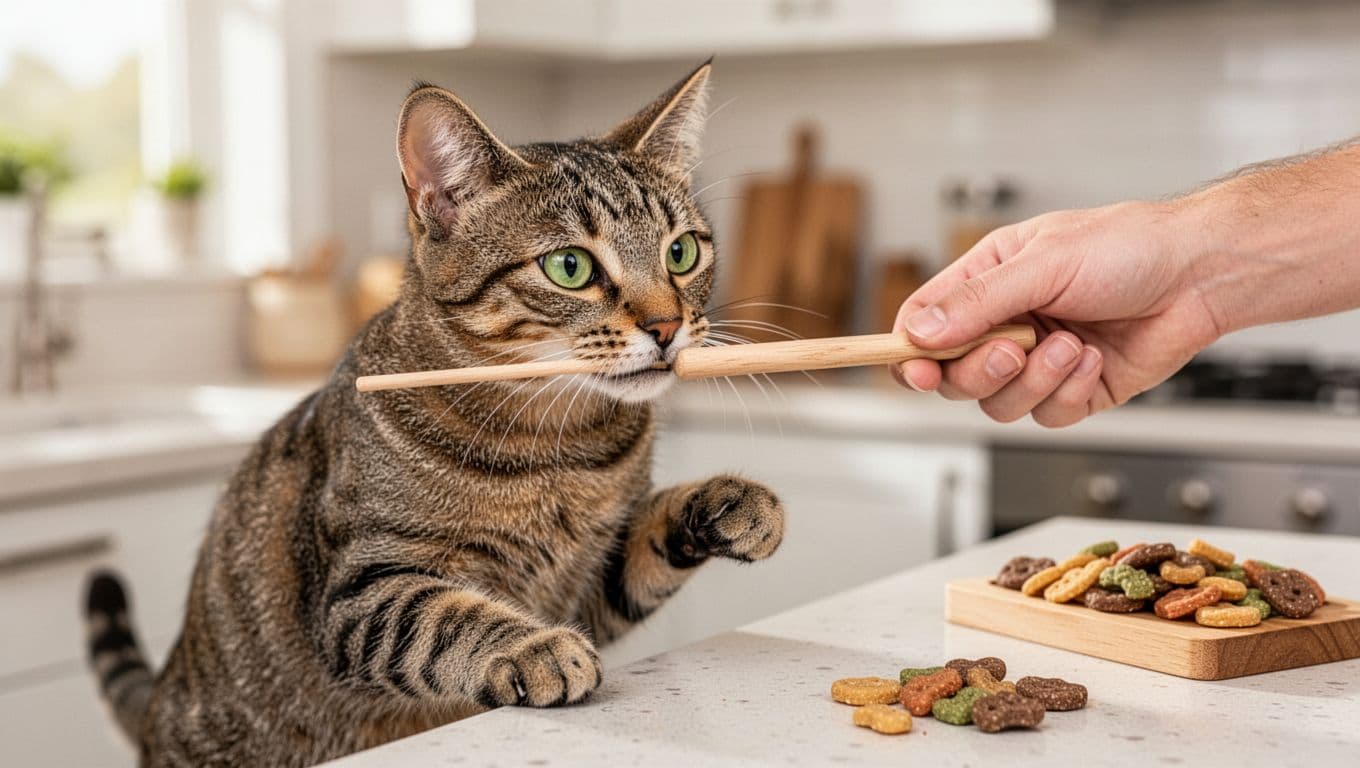 Target training with a simple nose touch, created with AI.
Teach these three mini behaviors:
- Target (touch): Hold out a finger or a spoon. When your cat sniffs or taps it with their nose, say “yes”, then treat. Next, move the target slightly to the side so your cat takes one step to touch it.
- Come when called: Say your cat’s name plus “come” once. When they take even one step toward you, mark and reward. Gradually add distance, then practice from another room.
- Go to your spot: Put a small mat on the floor. Lure your cat onto it, mark, treat. Soon, reward only when all four paws land on the mat, then name it “mat” or “spot.”
This training becomes a shared code. It also gives you a polite way to redirect behavior without grabbing or scolding.
Daily routines that make your cat feel understood (and cut down on meowing)
Cats relax when they can predict the day. That’s why consistent routines often reduce attention-meowing. You’re not “giving in,” you’re showing your cat when good things happen, so they don’t have to demand them all day.
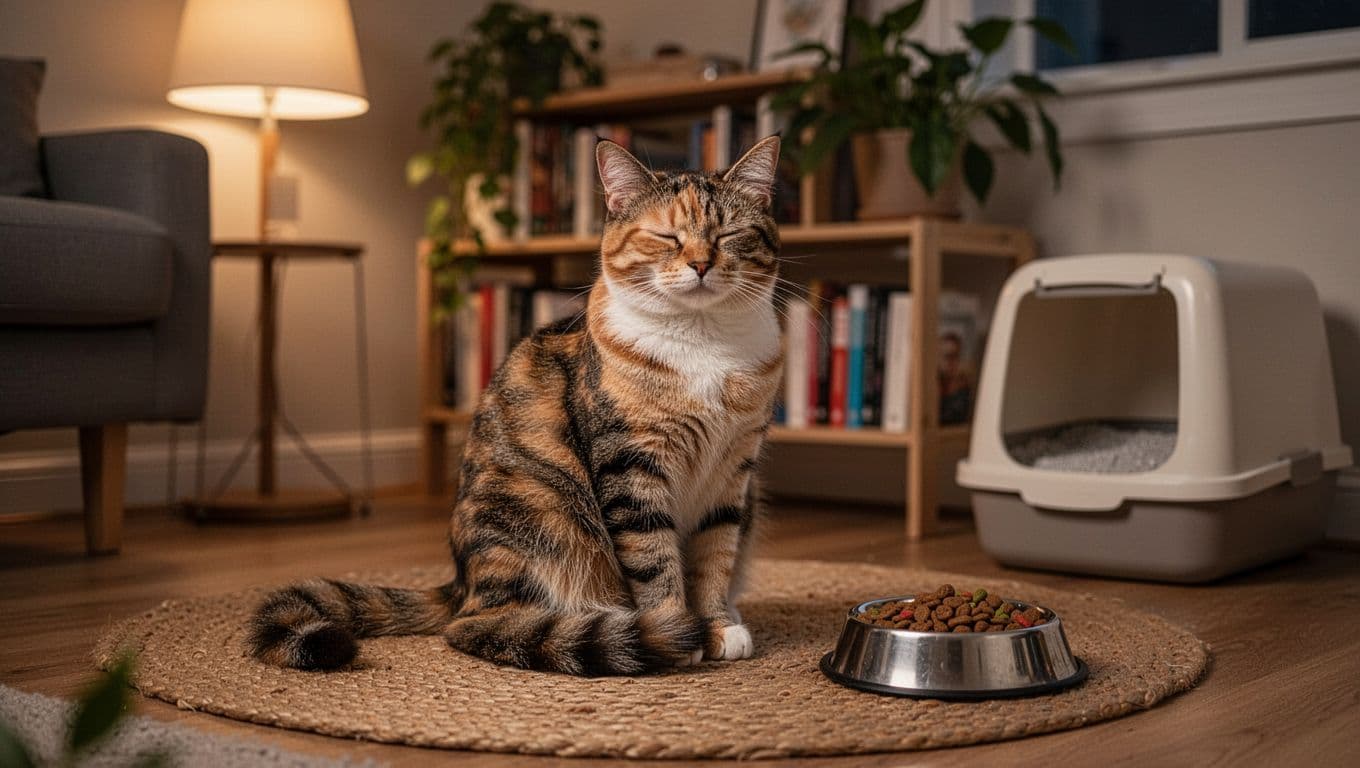 A calm routine moment with a resting spot nearby, created with AI.
Focus on four basics:
- Predictable feeding times (and don’t “top off” the bowl every time they yell).
- Clean litter on a steady schedule, because discomfort creates noise fast.
- Quiet resting spots (a bed, a box, or a perch) where nobody bothers them.
- A short daily check-in: a calm hello, a few pets if invited, then a quick play session.
Arrivals home matter too. Keep them low-drama: calm voice, let your cat approach, offer a slow blink, then do a short play burst. Some cats greet with mixed signals, like rubbing and purring plus yawning or stretching as stress coping. That’s normal, so give them space to settle before you scoop them up.
If your cat’s meowing feels constant, this overview from the ASPCA helps you sort common causes and next steps: ASPCA guide to meowing and yowling.
Conclusion
Communicating with your cat gets easier when you treat it like a whole system, not just meows. Sounds, body language, touch, scent, and routines all work together to show what your cat wants and how safe they feel. When you answer with calm voice cues, slow blinks, short hunt-style play, and consent-based petting, you build trust without rewarding pushy behavior.
This week, pick two methods and do them on purpose, every day. For example, offer a slow blink when your cat looks at you, then follow it with a 5-minute wand session. Or use one steady word for meals, then pause petting the moment the tail starts to flick.
Also, keep safety in mind. If your cat suddenly hides, acts aggressive, stops enjoying touch, or seems sore, schedule a vet visit to rule out pain or illness.
Thanks for reading, now watch for the patterns only your cat has, because the best “conversation” comes from learning their habits over time.