
Cats treat windows like live TV. They perch, chatter at birds, and sometimes climb like they’ve got a mission. That’s the fun part.
The problem is that window treatments can turn that daily routine into a real safety risk. Dangling cords can form loops, slats can snap, and weak hardware can come down fast if a cat launches off the sill.
This guide keeps it simple. You’ll learn what to watch for, what to buy if you’re ready to replace your coverings, and what you can fix today if new blinds aren’t in the budget. A safer setup can still look great. It just needs fewer strings, sturdier parts, and a plan for your cat’s favorite view.
Why some window coverings are risky for cats (and what problems to watch for)
 Photo by Helena Jankovičová Kováčová
Most cat owners don’t shop for blinds thinking, “Could this injure my cat?” But cats don’t see cords and slats as decor. They see toys, ladders, and a shortcut to the windowsill.
Two things usually cause trouble: entanglement and impact. Entanglement happens when a cord forms a loop around a neck, leg, or torso. Impact happens when a cat climbs, pulls, or jumps, and a rod or bracket drops.
Even calm adult cats can have one wild moment. Kittens, newly adopted cats, and high-energy breeds often test everything. Also, cats learn patterns. If batting the cord makes the shade move, they’ll keep doing it because it feels like “catching” the window.
Below are the big hazards to spot, plus quick signs your current setup needs attention.
Cord dangers: loops, long pulls, and how cats get caught
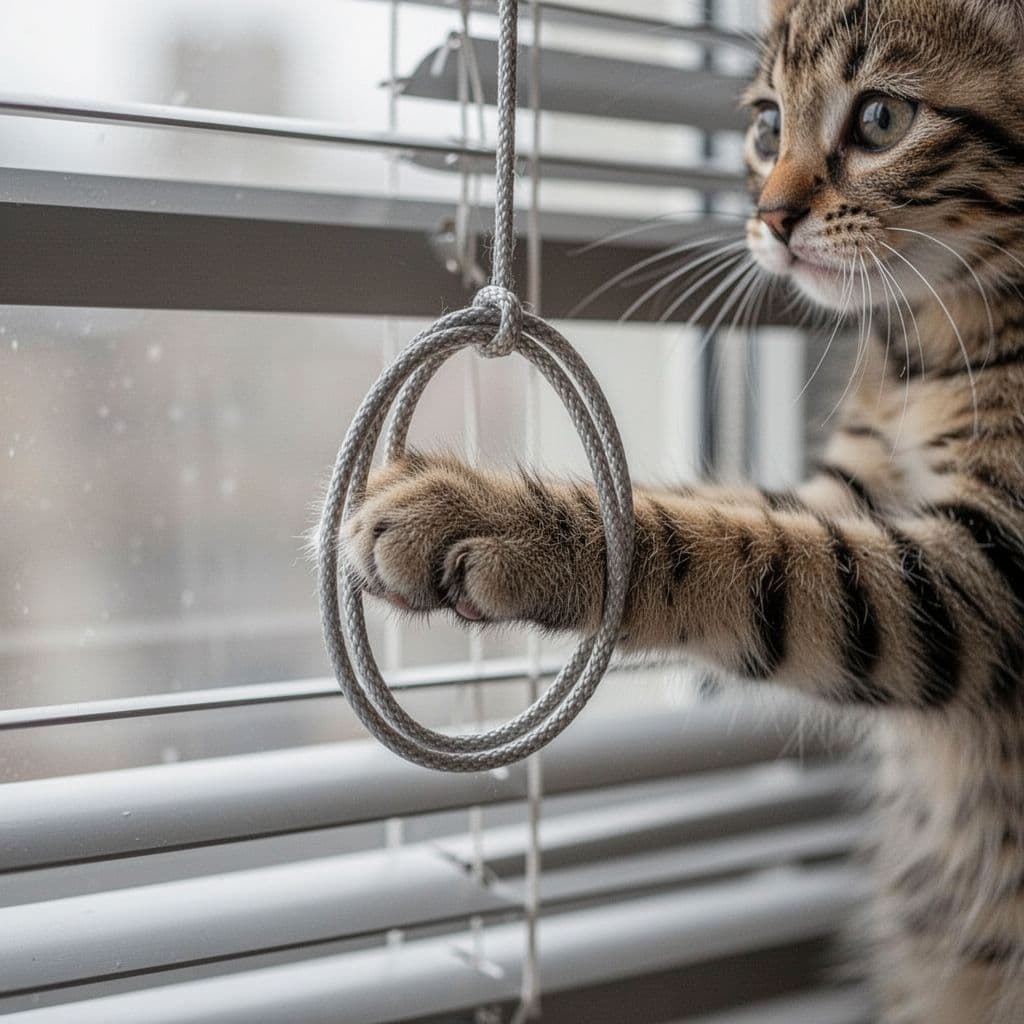 An up-close look at how a cord loop can turn into a hazard during play, created with AI.
Cats love movement. A dangling pull cord swings, bounces, and “runs away” when they swat it. That’s exactly the kind of thing that triggers play and pouncing.
The danger grows when a cord makes a loop. A cat can slip a head or leg through, then twist while trying to get free. Since cats often panic when stuck, the situation can escalate quickly.
If you have any of these, you have risk:
- Continuous-loop chains (often on roller shades or vertical blinds) that hang low enough to reach
- Long pull cords that dangle near the sill or floor
- Tied-up cords that can loosen and form a loop again (especially if a cat bats at the knot)
For a clear explanation of why cords are treated as a serious home hazard, review the CPSC window covering cord safety guidance. It focuses on children, but the same loop problem applies to pets.
If a cord can swing freely, a cat will eventually “check it.” Plan for that, not for best-case behavior.
Other common issues: chewing, climbing, and toppling hardware
Cords aren’t the only issue. Many cats chew on plastic wand tips, tassels, or the edges of vinyl blinds. Some cats bite wooden slats, especially when they’re stressed or bored. That chewing can leave sharp edges, and broken slats can pinch paws.
Climbing is the other big one. Cats use blinds like ladders because slats give them steps. Cellular shades can also tempt climbers because the bottom rail offers a grip point. Once a cat’s weight shifts, weak brackets may pop loose.
Watch for these “your windows are being tested” signs:
- Bent or missing slats
- Frayed cords or cords that look fuzzy
- Wobbling rods or brackets that shift when you tug lightly
- Scratch marks near the sill or along the wall by the window
If you see damage, don’t wait for a bigger accident. Even a small fix, like re-mounting a loose bracket into a stud, can prevent a hard fall.
Choosing cat-safe window treatments that still look good
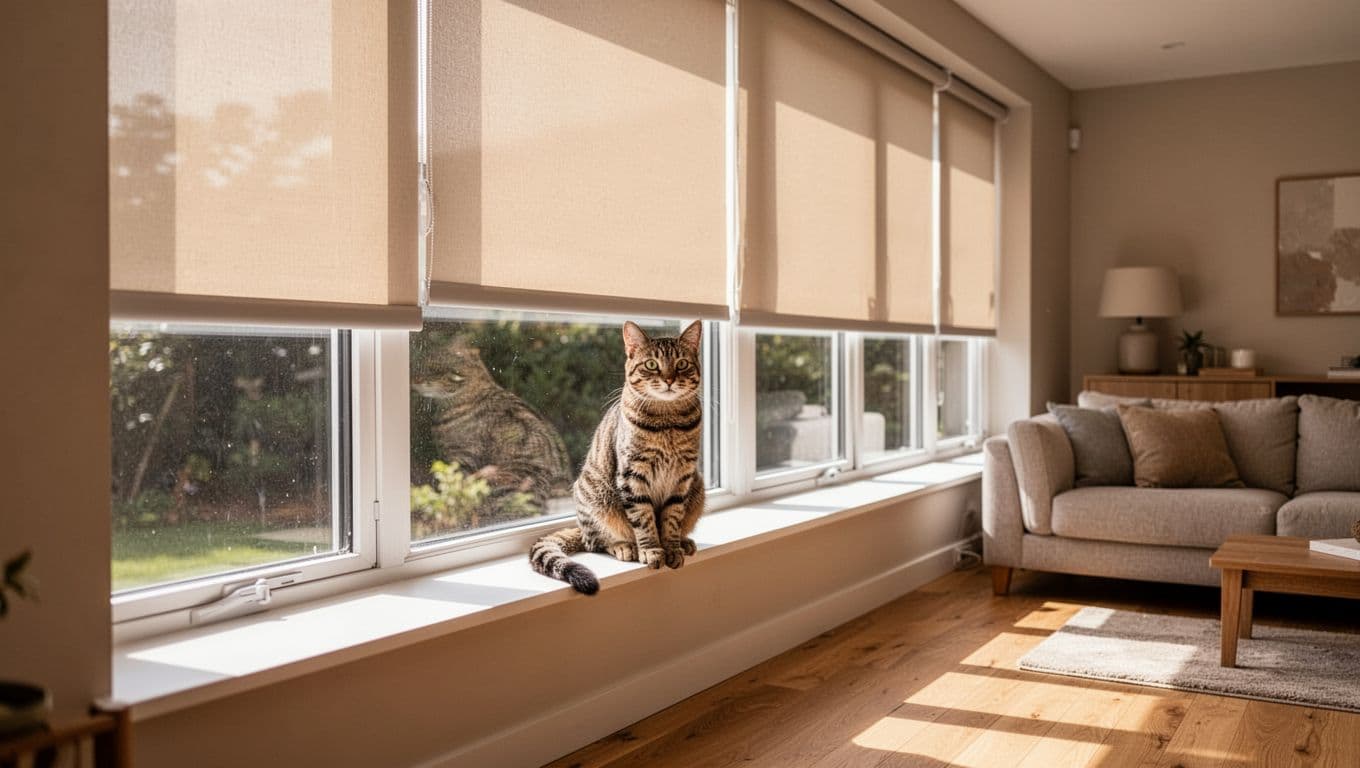 A clean, cord-free window setup with a cat enjoying the view, created with AI.
When you’re shopping for cat-safe window treatments, aim for two outcomes: remove cords and reduce grab points. You can still get privacy, light control, and a finished look. You just want fewer parts that swing, dangle, or snap.
Also, think room by room. A calm bedroom window might do fine with curtains. A busy patio door, on the other hand, needs something sturdier.
Cordless blinds and shades: what to buy and what to avoid
Cordless doesn’t have to mean expensive. Many modern blinds and shades use a cordless lift system where you raise and lower the bottom rail by hand. Others use a wand control or a motor.
Common cordless options include:
- Spring-assist cordless lift: You push up or pull down on the bottom rail.
- Wand control: A short wand tilts or moves the shade without a dangling cord.
- Motorized shades: Controlled by a remote, wall switch, or app, with no reachable strings.
When you shop, look for a sturdy bottom rail that feels solid, not flimsy. Smooth edges matter too because cats rub cheeks on everything. Easy-to-clean materials help if your cat leaves nose prints on the lower section.
What to avoid? Some products are marketed as “cordless,” yet still have accessible cords behind the shade or at the side. Also skip slats that feel brittle. If they snap easily in your hands, they won’t survive a cat.
If you want a deeper rundown of cat-friendly styles and materials, this guide to cat-proof blinds and shades offers practical examples of what tends to hold up in real homes.
Best options for serious climbers: roller shades, solar shades, and shutters
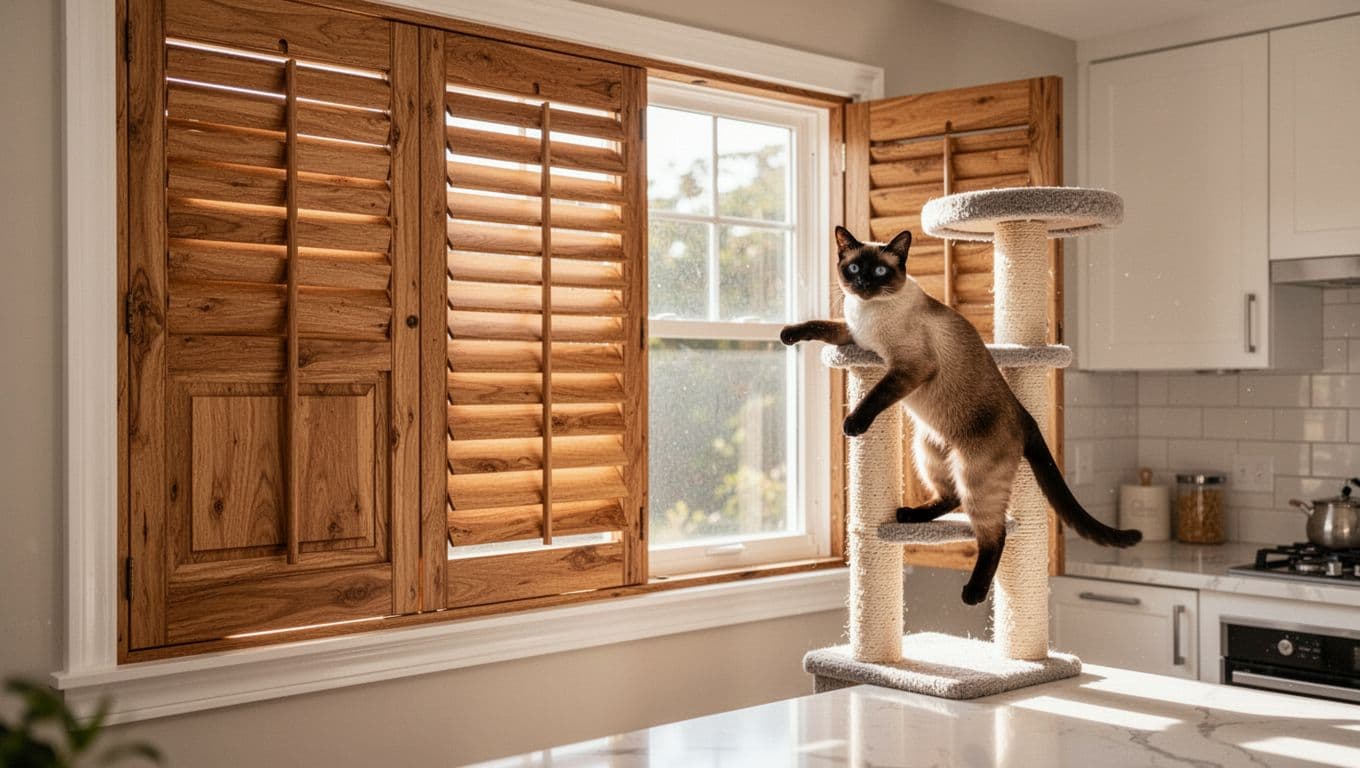 A durable shutter setup paired with a better climbing option nearby, created with AI.
Some cats climb because they want height. Others climb because the shade moves when they touch it. Either way, the best window covering is the one that gives them the least to grab.
Here’s a simple comparison to help you decide:
| Option | Why it’s cat-friendlier | Main tradeoff |
|---|---|---|
| Roller shades | One flat sheet, fewer “steps” to climb | Fabric can snag if a cat insists |
| Solar shades | Similar to rollers, plus filtered light and partial view | Not full privacy at night without liners |
| Interior shutters | No cords, hard surface, very durable | Higher cost, more install work |
The takeaway: roller and solar shades reduce footholds, while shutters resist scratches and chewing best.
A quick “pick this if” guide helps in real life:
- Pick roller shades if your cat bats at slats or you’re tired of bent blinds.
- Pick solar shades if you want daytime glare control and still want to see outside.
- Pick shutters if your cat is rough on everything and you want the most durable option.
For more general ideas that balance pets and home function, Window World’s pet-friendly window treatment overview is a helpful starting point.
Curtains can be safe too, if you choose the right setup
Curtains often get labeled “safe” because they don’t have cords. That’s mostly true, but curtains can still cause problems if the rod is weak or if the cat uses the panel like a climbing wall.
Start with hardware. Use a rod that anchors into studs when possible. If you’re in a rental, use the strongest anchors you’re allowed to install, and check the weight rating. A thin tension rod is rarely a good match for a determined cat.
Fabric matters more than people expect. Loose weaves snag easily, and that makes climbing even more rewarding. Heavier fabrics or tighter weaves resist claw pulls better. Blackout curtains can also discourage window pouncing because the cat can’t see motion as clearly.
Tiebacks help, but placement is everything. Put tiebacks high and out of reach, not at cat level where they become a new toy. Magnetic holdbacks can work well because they sit flat and don’t dangle.
If you like a layered look, a double rod is practical. Keep sheers closed for daytime privacy, and keep heavier panels mostly parked. That way, your cat gets light without having a big moving “sail” to wrestle.
Make your current windows safer today (no full remodel required)
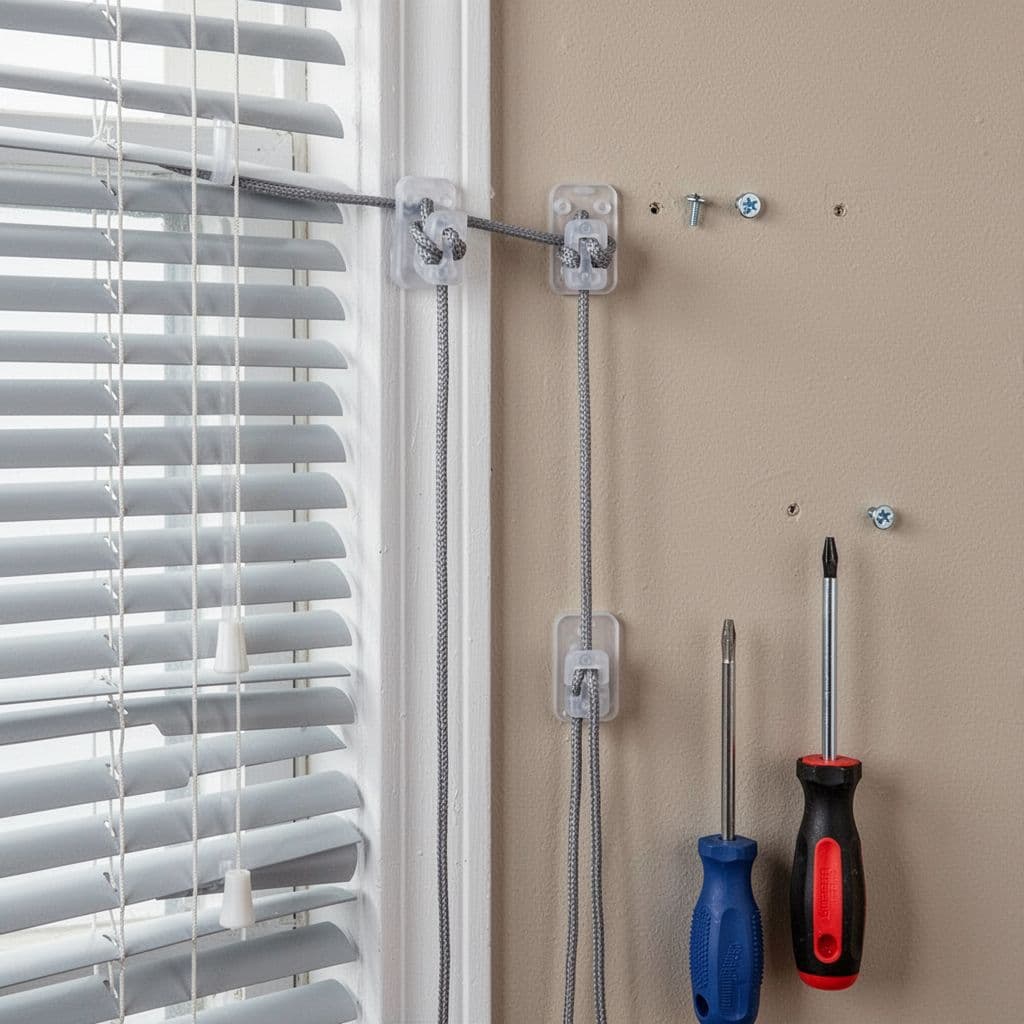 A simple way to secure cords up high so they’re harder to reach, created with AI.
If replacing all your window coverings isn’t realistic right now, you can still make meaningful safety upgrades. Think of it like childproofing, but for a pet that can jump five feet straight up.
Focus on two moves: remove reach and reduce temptation. That means managing cords and giving your cat a better window spot.
Simple cord fixes: shorten, secure, and remove loops
First, walk through your home and treat every window like a “cat inspection.” Look at the cord length when the blinds are fully raised and fully lowered. A cord that seems fine in one position might hang low in the other.
Here are practical fixes that most households can do quickly:
- Mount cord cleats high on the wall and wrap cords securely. Place them well above your cat’s standing reach.
- Use cord shorteners or cord wind-ups designed for window coverings, so extra length doesn’t dangle.
- Remove tassels and connectors that add weight and swing. Less movement means less interest.
- Cut excess cord only if the product allows it, and you can re-secure the end safely. If you’re unsure, don’t cut.
Tying cords in a knot feels like a fix, but it often backfires. Knots loosen over time, and a loosened knot can create a loop again. Cats also bat at knots because they’re “a thing” on the cord.
After you make changes, re-check every few weeks. Cats don’t give up easily. They test setups like a kid testing a loose tooth.
If you want extra ideas for making older blinds safer, this article on DIY safer blind cord options can help you think through replacements and upgrades.
Reduce the urge to climb: give them a better window spot
Sometimes the best fix isn’t at the window treatment. It’s next to it.
Cats climb because they want a higher view, warmth, or a better angle on birds. If the only route to the sill involves scaling the blinds, they’ll take it. Give them a better route.
A few setups tend to work well:
A stable cat tree near the window, but not pressed against the blinds, gives height without damaging your coverings. A wide window perch with non-slip padding can also help because it makes the sill comfortable and predictable. In the same room, add a scratching post so your cat has a place to “work” their claws that isn’t the curtain hem.
Also manage the triggers. If your cat goes into hunting mode every time birds land close, move a feeder farther away. Even a few extra feet can reduce frantic pouncing at the glass. For ground-floor windows, a simple window film on the lower pane can block the most intense visual action while keeping light in the room.
If curtain climbing is your main battle, VerveCat’s curtain cat-proofing guide has practical behavior-based tips that pair well with sturdier hardware.
Conclusion
Safe window treatments for cat owners come down to a few clear choices: go cordless when you can, pick sturdy materials that don’t snap or snag, and secure or remove cords right away on anything you already own. Small hazards add up, especially in rooms your cat treats like a racetrack.
Do a quick walk-through today, starting with the living room, bedrooms, and patio doors. Then choose one window to upgrade this week, even if it’s just installing a cleat and adding a perch. Room by room, you’ll end up with a home that looks pulled together, and feels a lot safer for the cat watching the world go by.