
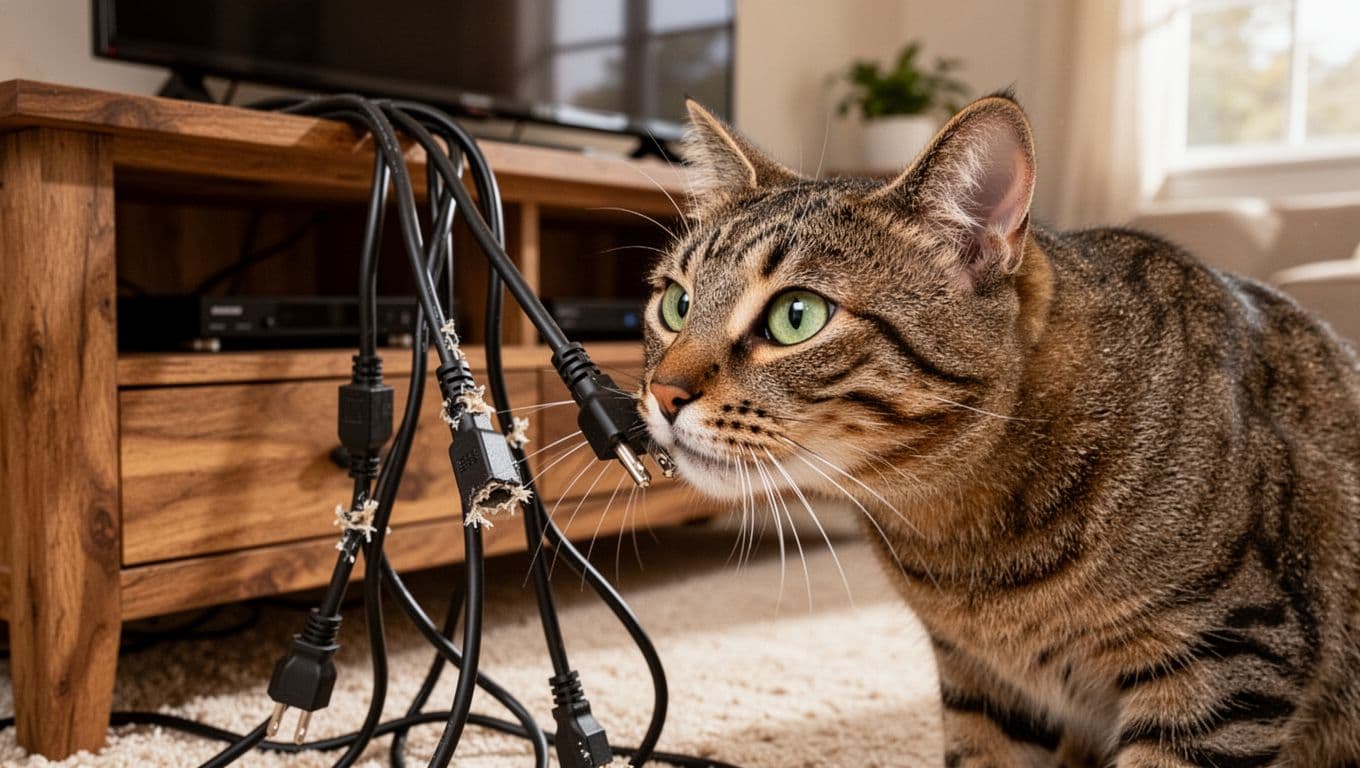
 Many cord problems start in the “behind the TV” zone, where cords hang like toys (created with AI).
You sit down to relax, then notice your cat crouched behind the TV stand. A split second later, they’re chewing the phone charger like it’s spaghetti. Maybe you’ve also found bite marks on earbuds, or a missing cable that “mysteriously” stopped working.
Cat-proofing electrical cords and outlets isn’t just about saving your electronics. It’s about preventing two scary risks: electrical shock or burns to your cat, and a potential fire hazard in your home. Some cats are more likely to chew, including kittens who are teething, bored indoor cats, and cats who love plastic or rubber textures.
The good news is you don’t need a complicated setup. You need a simple plan that starts with quick fixes, then adds stronger barriers and smarter routing. And if chewing already happened, you’ll know what to do next.
Do a quick home check to find your highest-risk cords and outlets
A good cord safety plan starts with a fast scan, not a shopping spree. Your goal is simple: reduce access and remove temptation. Think of it like toddler-proofing, except the toddler can jump onto the dresser.
Start room by room. In the living room, look behind the TV and around consoles. Those dangling HDMI and power cords often sway when you vacuum, which makes them look like prey. Next, check near couches and recliners where chargers hide under pillows. Bedrooms are another hot spot because cords drape off nightstands and bedframes.
In a home office, scan under desks and along chair legs. Power strips on the floor create a “cord buffet” at cat level. Kitchens can be risky too, especially around countertop appliances with cords that hang over the edge. Don’t forget holiday lights, extension cords, and any cord that runs along a walkway.
As you scan, look for frayed insulation, chew dents, exposed wire, bent plugs, loose outlets, warm plugs, and cords pinched under furniture legs. Also notice cords that dangle, bounce, or cross open floor space. Those are the ones cats find fastest.
Take a few quick photos as you go. Later, you can compare “before and after” and spot new damage sooner.
One hard rule matters most: if a cord is damaged, unplug it and replace it. Don’t tape over exposed wire, and don’t keep using “mostly fine” chargers.
Spot the cords cats love most (and why)
Cats rarely choose the thick TV power cord first. They tend to go for thin, soft, and flexible cords, like phone chargers, laptop cables, earbuds, and small lamp cords. Rubbery insulation also feels good to bite. A cord that swings or moves when they paw it can turn into a full play session.
Chewing happens for different reasons. Some cats do it for play, others from stress, boredom, or teething. A few chew due to pica, which means they crave non-food items. If chewing is sudden, intense, or paired with other odd behaviors, a vet visit is a smart move.
Know when it is an emergency
If you see sparks, smell burning, hear crackling, or feel heat from an outlet or plug, treat it like urgent home maintenance. If it’s safe, shut off power at the breaker, then call an electrician.
If your cat may have been shocked, don’t “wait and see.” Watch for drooling, pawing at the mouth, trouble breathing, weakness, or burns. If any are present, go to an emergency vet. For clear, step-by-step guidance, read what to do if your cat chews an electrical cord.
If there’s heat, smoke, or a shocked cat, speed matters more than troubleshooting. Cut power if it’s safe, then get professional help.
Cat-proof electrical cords with barriers that actually hold up
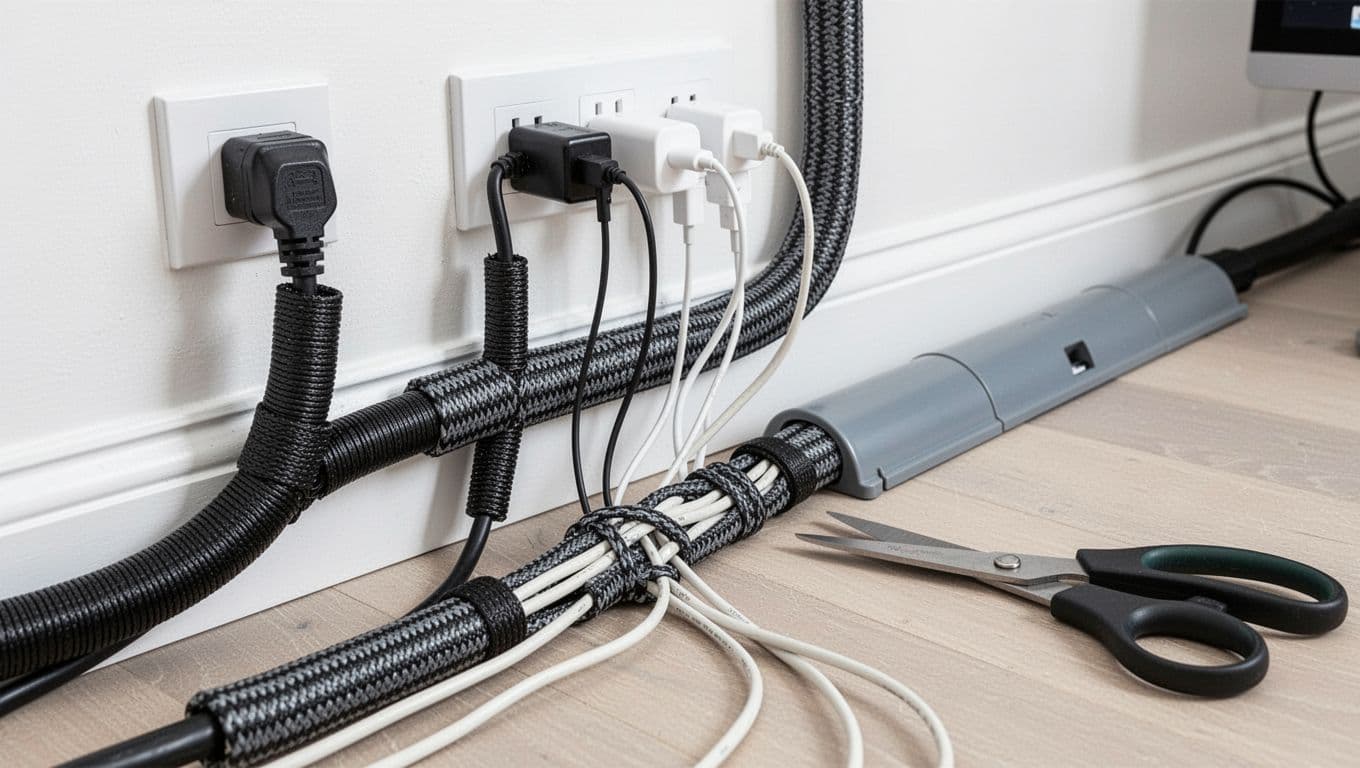 Different cord barriers work best in different spots, the “right” choice depends on where the cord runs (created with AI).
Once you’ve found your worst areas, focus on two strategies: physical protection and removing access. Most homes need a mix of both. Cover the cords your cat can still reach, hide and reroute everything else, then secure any remaining slack.
Before you wrap anything, keep a few safety basics in mind. Avoid sharp bends that strain the wire near the plug. Don’t bundle high-wattage cords so tightly that heat can’t escape. Also keep vents clear on power adapters and charging bricks, since some run warm during normal use.
Here’s a quick comparison to help you match the barrier to the problem.
| Protection option | Best for | Why it helps | Watch-outs |
|---|---|---|---|
| Split loom tubing | Thicker cords, single runs | Adds a tough layer and bulk | Choose the right diameter, don’t pinch at plugs |
| Braided sleeve (PET) | Bundles of smaller cords | Harder to bite through, looks neat | Can slide if not secured at ends |
| Spiral wrap | Light-duty, temporary bundling | Easy to install and adjust | Not the toughest choice for determined chewers |
| Rigid cord cover / raceway | Floor runs, baseboards | Removes the “toy” feel | Use rated floor covers for high-traffic areas |
The takeaway: if your cat is persistent, go more rigid and less flexible. Softer wraps are better for organization than heavy chewing.
Cover and toughen cords so teeth cannot reach the wire
Start with cords that must stay exposed, like a lamp cord or a standing fan. Split loom tubing is a strong option for thicker cables. For smaller cords, braided sleeves can protect a bundle, which also cuts down on dangling ends. Spiral wrap can work for light-duty areas, but it’s easier for some cats to grip.
Measure before buying. You want a sleeve or tubing that fits without forcing the cord. Too tight can stress the plug end, and too loose can slide and expose the cord again. When in doubt, size up slightly and secure the ends with a proper fastener made for cable management.
Avoid placing cord protectors near heat sources, like space heaters, hot pipes, or heating vents. Also be careful across doorways. If you must cross a threshold, use a floor-rated protector designed for foot traffic, not a thin plastic channel.
If a cord is already chewed, replace it first. A cover is not a safe “patch.” For a deeper look at common cord cover styles and how they’re used, see this guide to bite-resistant cord covers for pets.
Hide cords with smarter routing (so there is nothing to chew)
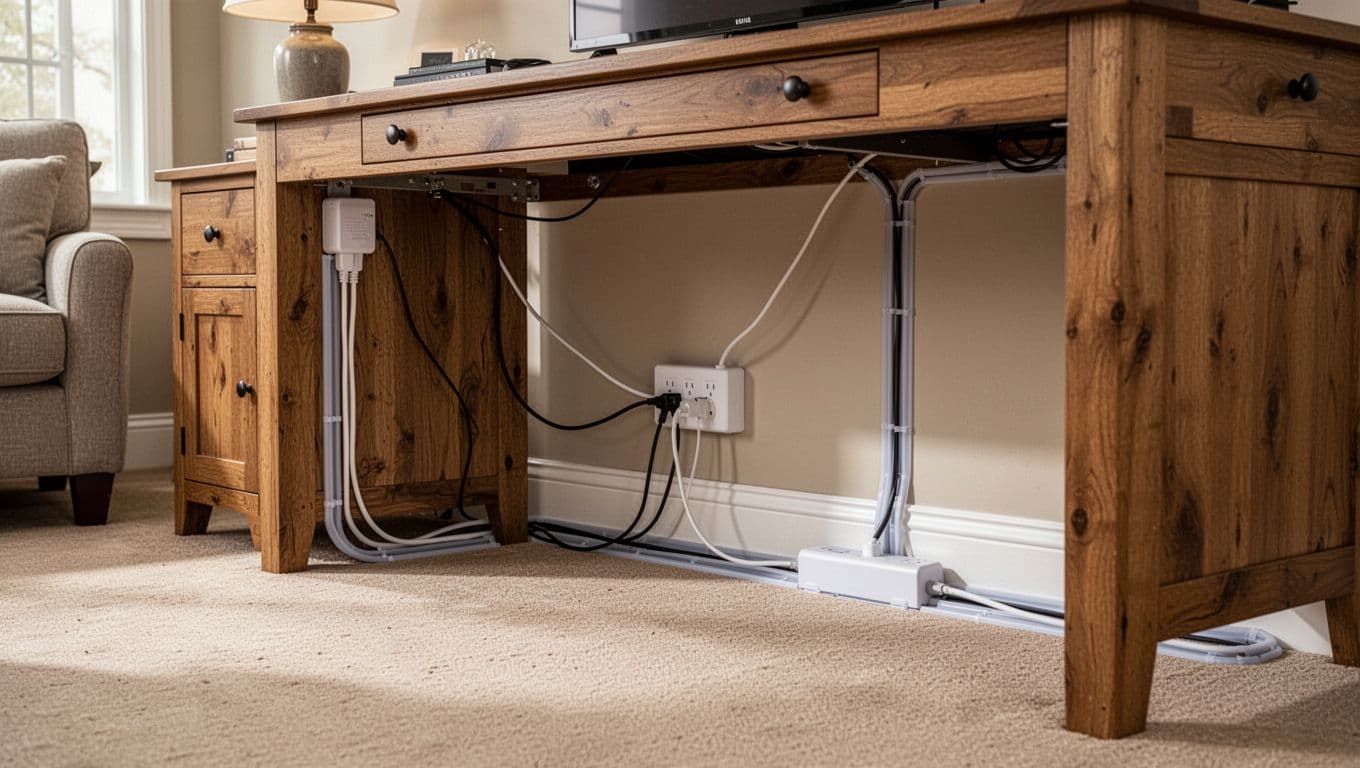 When cords are routed along baseboards and tucked behind furniture, most cats lose interest fast (created with AI).
Hiding cords beats “training” in most homes because it removes the reward. In other words, the safest cord is the one your cat can’t reach.
A simple routing plan works in almost any room:
- Run cords behind furniture instead of beside it.
- Use adhesive raceways along baseboards to keep cords flush to the wall.
- Mount power strips under desks or on the back of a media console.
- Keep chargers in a drawer, on a high shelf, or inside a cord box.
Leave a little slack near plugs for strain relief. If a cord is pulled tight, a cat can loosen the plug with a single tug. For standing lamps, route the cord straight down the back side of the table or stand, then into a raceway. For window AC units, keep the power cord as short and direct as possible, and block access behind a sturdy piece of furniture if you can.
If you want more ideas for cable routing and keeping bundles contained, this walkthrough on child and pet-proofing cables shows practical approaches that translate well to cat homes.
Make cords boring, not tempting
Barriers work best when your cat has better things to do. If your cat chews at the same time every day (often evenings), that’s a clue. They might be telling you they need play, stimulation, or a calmer space.
Try pairing cord protection with simple changes: a daily wand-toy session, puzzle feeders, and rotating toys so the “new” feeling returns. If chewing happens near a desk or TV, place a scratching post or cat tree close by. That gives them an acceptable target in the same area.
Taste deterrent sprays can help some cats, but don’t rely on them alone. Test on a small spot first so you don’t damage the cord’s surface. Reapply as directed, since the effect fades. Also avoid getting spray near eyes and mouth, and stop using it if your cat seems irritated.
Protect outlets and power strips so paws and mouths stay out
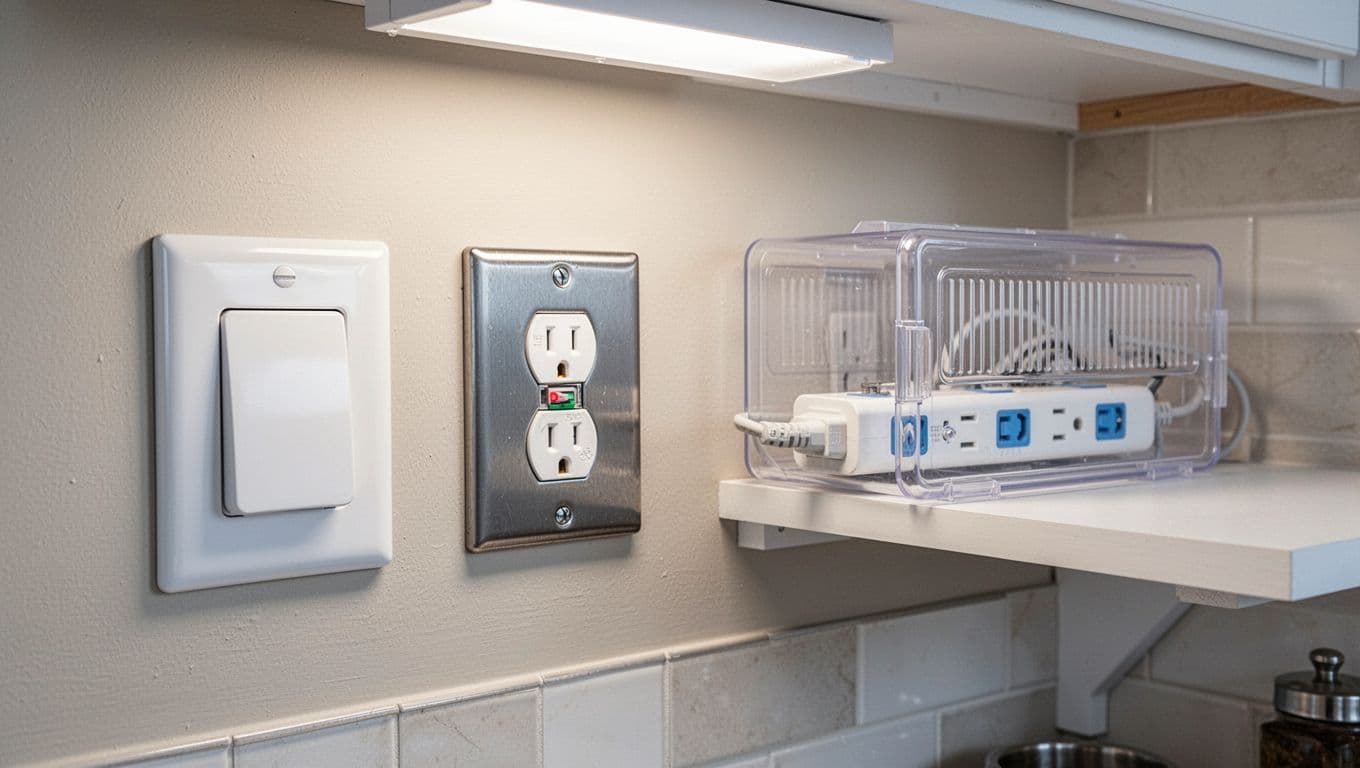 Outlet covers and ventilated power strip boxes reduce access to the spots where many cords meet (created with AI).
Outlets and power strips carry extra risk because they combine electricity with multiple cords in one place. They also attract cats who like warm spots, tight corners, or the “wiggle” of plugs.
Start with the easiest wins. If you have unused outlets at cat height, cover them. For in-use outlets, consider sturdier solutions that don’t pop out when bumped. Power strips need their own plan because they often sit on the floor, right where cats patrol.
Heat matters here. Large adapters can run warm, and some charging bricks need airflow. Don’t cover power gear in a way that traps heat or crushes cords at sharp angles.
Renters can usually add temporary protections, like outlet caps, sliding covers that replace the faceplate (keeping the original plate to reinstall later), and power strip boxes. Homeowners have the option to upgrade the outlet itself if it makes sense.
Also avoid common mistakes: don’t overload a power strip, don’t daisy-chain strips together, and don’t run cords under rugs where heat can build up and damage can stay hidden.
Outlet covers, tamper-resistant outlets, and what is worth installing
Plug-in outlet caps are quick and inexpensive for outlets you don’t use. They’re best in guest rooms, hallways, and behind furniture that a cat can still reach.
If your cat tends to pry things loose, sliding outlet covers (the kind that close automatically) hold up better than simple caps. Tamper-resistant outlets are a longer-term upgrade because internal shutters block access unless a plug is inserted correctly. They’re especially helpful for kittens, who explore with paws and teeth.
If an outlet feels loose, shows scorch marks, or makes noise, don’t try to “cat-proof” around it. Get an electrician. For kitchens, bathrooms, garages, and laundry areas, GFCI protection is often required by code and is worth discussing with a professional.
Power strip safety for cat homes
Power strips are where cord management either works or fails. If possible, keep strips off the floor. Mount them under a desk, on the back of a cabinet, or on a wall where cords can drop straight down into a protected route.
A ventilated power strip cover box blocks access to the switches and plug ends, which also prevents cats from chewing right at the connection point. After you box the strip, manage the cord bundle exiting the box with a sleeve so individual cords don’t splay out like tempting strings.
Replace old strips, especially if the switch feels loose or the housing looks worn. Use surge protection for sensitive electronics when appropriate, and keep cords unpinched so they don’t overheat.
For additional vet-reviewed ideas that complement outlet and strip safety, check out vet-approved ways to cat-proof wires.
A power strip on the floor is easy access. A mounted, covered strip turns a chewing target into a non-event.
Conclusion
Cord and outlet safety gets easier when you follow a tight order. First, identify your worst spots with a quick scan. Next, replace any damaged cords right away, then cover or hide what’s still reachable. After that, lock down outlets and power strips so your cat can’t mouth plugs or paw at gaps.
Keep it simple with a weekly “two-minute check” during cleaning. Look for new tooth marks, warm plugs, and cords that slipped out of place. Cats notice small changes, and they’ll test a new dangling cable fast.
Most cord chewing stops when the setup removes access and your cat has better outlets for energy. If chewing starts suddenly or seems obsessive, call your vet. If an outlet is hot, loose, or sparking, call an electrician. A safer home means you can relax again, even when your cat explores behind the TV.