
A cat can learn a cabinet handle faster than some people learn a new phone. One minute your cat is rubbing your legs, the next they’re pawing at the sink cabinet, slipping into a pantry, or yanking a drawer open like they pay rent.
The risks add up fast. Cleaning products, sharp tools, choking hazards (think rubber bands and batteries), broken glass, and snack raids can turn “cute and clever” into a vet visit. Some cats also get trapped inside a cabinet or behind a closed door, then panic and scratch their way out.
The good news is you don’t need to lock down every hinge in the house. A simple plan works best: figure out your cat’s “hot spots,” pick the right cat-proof cabinet latches and drawer locks, then make those spaces less rewarding to mess with.
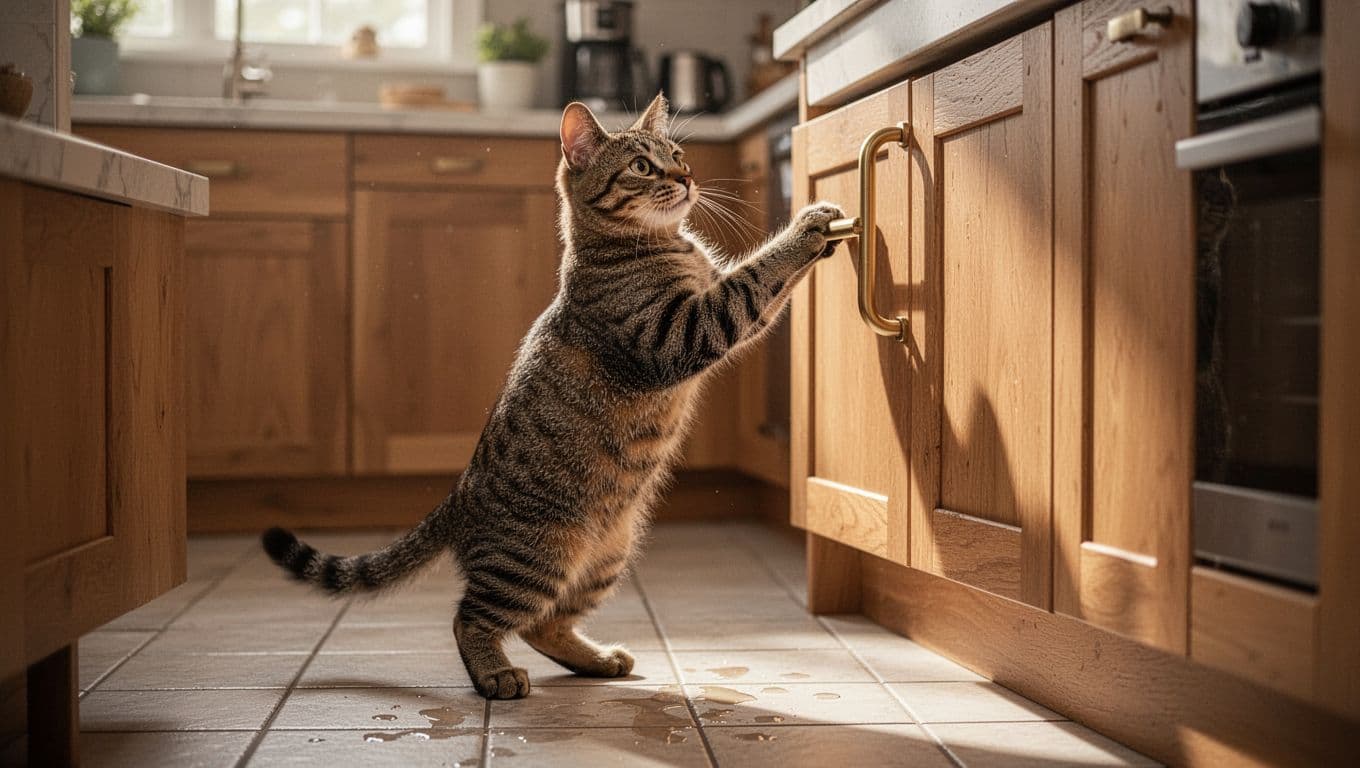 Curiosity plus a handle is often all it takes, image created with AI.
Start with a quick safety check: what your cat is trying to reach
Before you buy locks, take ten minutes to “follow the cat.” Where do they go first after meals? Which cabinet do they smack at when you’re busy? That’s your real priority list.
A good rule: secure high-danger spots first, then high-temptation spots. Danger means toxins, blades, cords, meds, and tiny objects that can be swallowed. Temptation means food smells, crinkly packages, warm hiding places, and anything that gets them attention.
Walk your home like a cat would, low and nosy. Open each likely cabinet and ask, “If this spilled or broke, what happens?” Also ask, “If my cat got in here and the door shut, could they get out?”
Here’s a simple way to sort it in your head (no fancy spreadsheet needed):
- If it contains cleaners, meds, blades, or batteries, it’s a “lock today” zone.
- If it contains food, trash, or fun textures (bags, paper, sponges), it’s a “lock soon” zone.
- If it’s mostly boring (extra napkins, mixing bowls), it may not need a lock unless your cat uses it as a clubhouse.
One more thing: check the routes to the cabinet. Cats often use a nearby chair or dishwasher handle as a step. If you block the route, you might reduce the break-ins without adding hardware.
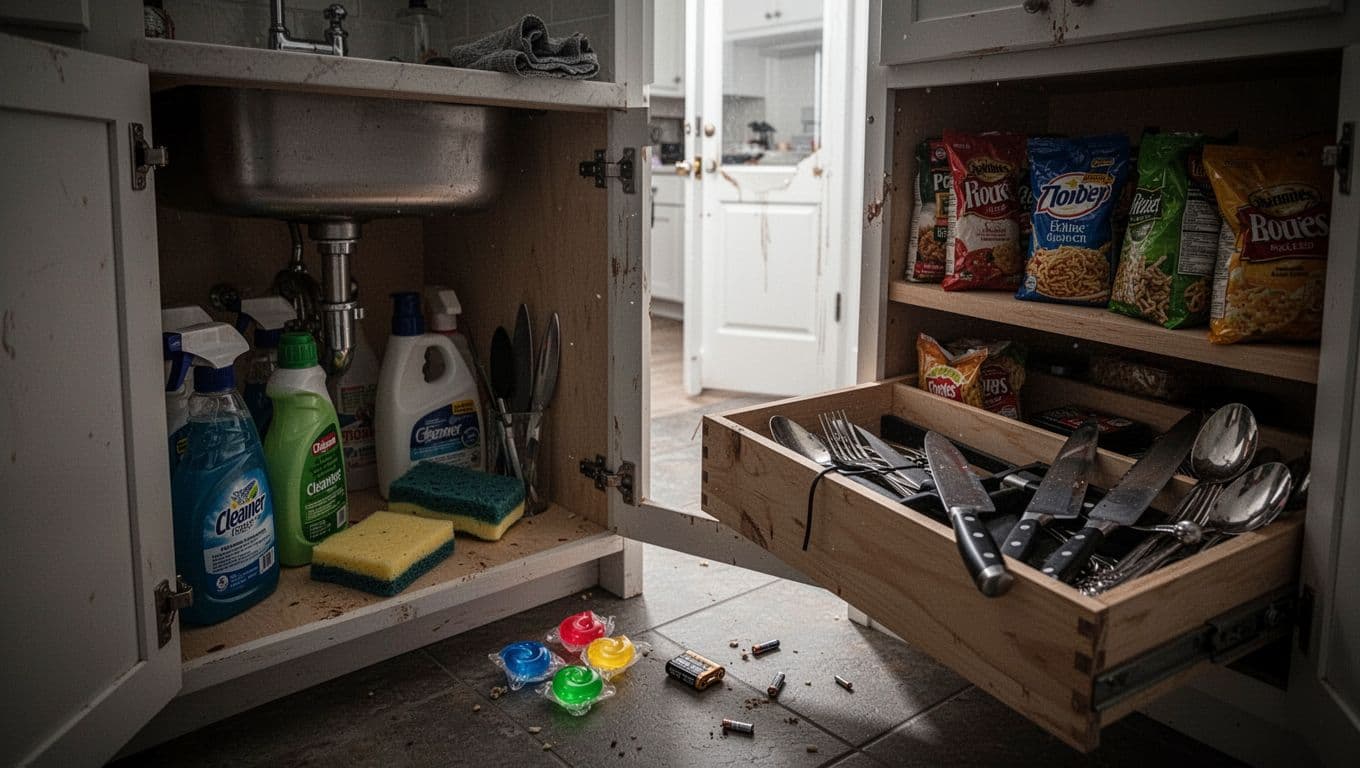 Common cabinet “hot spots” often hide the most serious hazards, image created with AI.
The highest-risk spots in most homes
In most US homes, the biggest risks hide in plain sight.
The kitchen sink cabinet is often Ground Zero. It’s dark, it smells interesting, and it holds cleaners. Laundry and dish pods are especially risky because they’re small, colorful, and easy to bite. If you want a quick refresher on which products can be dangerous, PetMD’s list of household cleaners to avoid near cats is a helpful starting point.
Trash pull-outs come next. Even if the trash can has a lid, a cat can tip it, shred it, or pull out something sharp. Greasy packaging also leaves a scent trail that keeps pulling them back.
Then there are the “quiet” hazards:
- Utensil and knife drawers, including peelers and skewers.
- Pantry drawers with bags of treats, jerky, or anything in thin plastic.
- Bathroom vanities with meds, dental floss, razors, and cotton swabs.
- Laundry supplies, especially stain removers and detergents.
- Garage cabinets with tools, screws, paint, and rodent bait (if present).
Finally, watch out for small chewables that roll into drawers: rubber bands, hair ties, twist ties, string, and loose batteries. Cats don’t need many seconds to grab one and sprint.
If an item is small enough to bat under the fridge, it’s small enough to swallow.
Why cats keep coming back (and what their behavior is telling you)
Cats repeat what works. If your cat once found a treat bag in a drawer, they’ll check that drawer like it’s their job. Even “nothing happened” can be a reward if the cabinet is fun to open, fun to hide in, or fun because you react.
Curiosity drives a lot of this, but it’s rarely just curiosity. Food smells linger on handles and edges. Some cats like the cool, enclosed “cave” feeling inside a cabinet. Others do it because they’re bored, especially indoor cats with lots of awake time and not enough hunting-style play.
Pay attention to the timing. If cabinet prowling ramps up at night, your cat might need more daytime play or a predictable evening routine. If it spikes after a schedule change, stress can be part of it. Cornell’s overview of destructive behavior in cats is a good reminder that many “bad” behaviors are normal needs showing up in the wrong place.
Also watch for stress signs that deserve extra support: overgrooming, hiding more than usual, appetite changes, and constant night mischief. A latch can block access, but it won’t fix anxiety by itself.
Choose the right cabinet and drawer locks for your space and your cat
There isn’t one best cat-proof cabinet lock. The right choice depends on three things: how determined your cat is, how often you use that door, and whether you can drill into the cabinet.
Think of locks like shoes. Flip-flops are great until you try to hike. If your cat is a “hiker,” you need stronger gear.
A practical way to choose:
- For a cabinet you open once a week, pick the strongest lock you can tolerate.
- For the trash or the treat drawer, pick something secure but easy enough that you won’t stop using it.
- For renters, focus on no-drill options first, but plan to upgrade if your cat outsmarts them.
Also look closely at your hardware. Cats can hook long bar pulls like a crowbar. Small knobs are harder to grab. Handle shape can matter as much as the lock.
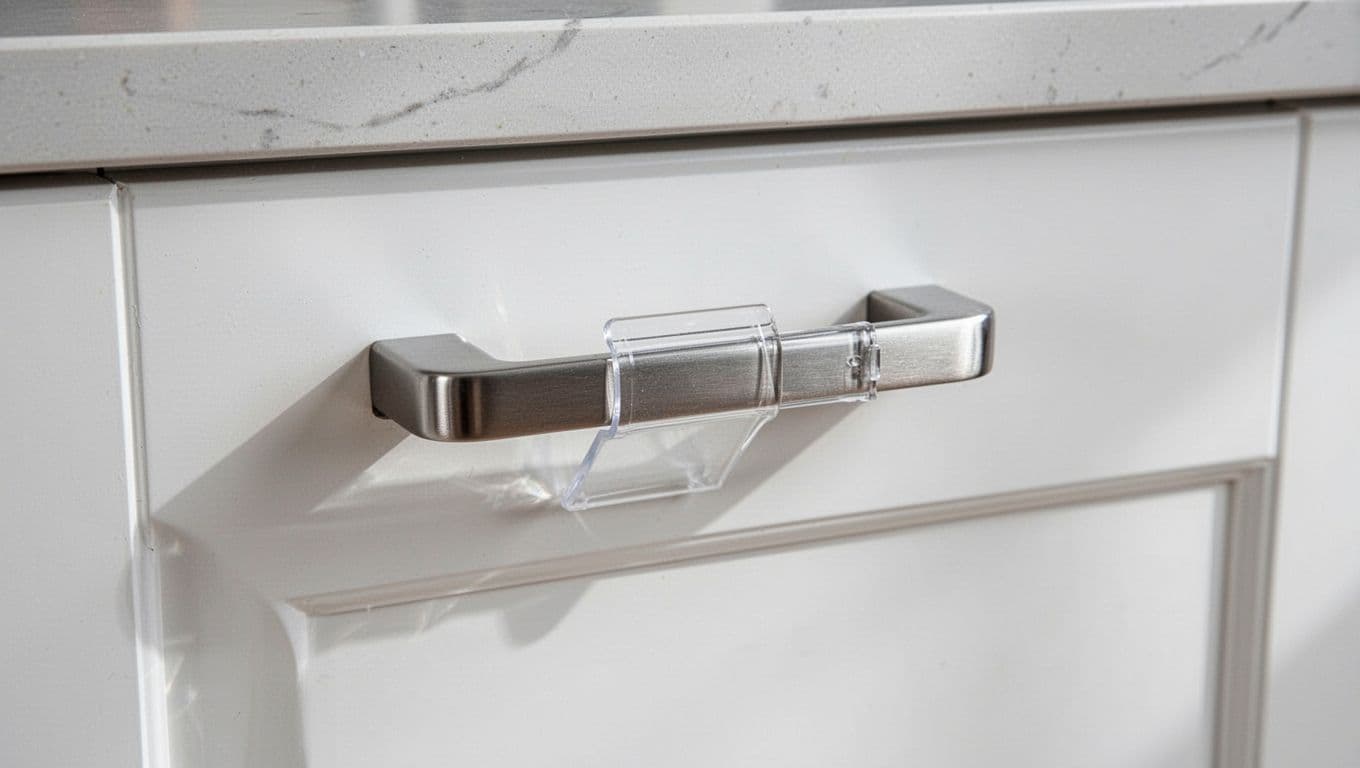 Many no-drill latches work well when installed carefully, image created with AI.
No-drill solutions: adhesive latches, strap locks, and magnetic locks
No-drill latches are popular because they install fast and remove with less damage. They’re also the first thing many cats test.
Adhesive strap locks (often clear) work well for basic pawing and casual tugging. They can fail, though, when surfaces are dusty, textured, or exposed to heat and moisture. Under-sink cabinets get humidity, so expect more stress there.
A few small steps make adhesive locks hold better: Clean the surface with rubbing alcohol and let it dry fully. Press firmly for the full time in the instructions. Then wait the full cure time before your cat gets a chance to “help.” Try not to place adhesive pieces right next to a dishwasher vent, sink steam, or the edge of a cabinet where water drips.
Magnetic locks are another no-drill option in many kits. They hide inside the cabinet and use a magnetic “key” outside to open. They’re harder for cats to defeat because there’s nothing to paw at. The tradeoff is convenience. You have to keep the key handy, and guests may need a quick lesson.
If you want to see how a commercial option is typically set up, the product page for MyPet Safety Paws cabinet locks shows the general style and intended use. You don’t need that exact product to apply the same idea.
When you need something stronger: screw-in childproof latches and hardware changes
If your cat can open drawers repeatedly, skip the “maybe” options and go straight to something more secure.
Screw-in childproof latches (installed inside) are reliable for heavy-use areas like trash cabinets, knife drawers, and pantry pull-outs. They resist repeated yanks, and they don’t rely on adhesive. The downside is drilling, plus a little more install time.
For some cabinets, a simple internal slide lock or a basic cam lock can also do the job. These tend to be sturdier, but they’re more visible and can change the look of your kitchen.
Hardware changes can help too. Swapping long bar pulls for round knobs makes it harder for cats to hook and pull. It won’t stop every cat, but it can reduce success rates.
A quick caution before you install anything inside a drawer: measure the clearance. Some drawers sit tight against the frame. Soft-close mechanisms can also get blocked by bulky latches. If the drawer starts rubbing or won’t close, adjust the placement instead of forcing it.
The best lock is the one you’ll actually use every day without getting annoyed.
Make cabinets less tempting so your cat stops trying to break in
Locks stop access, but habits keep pressure on the locks. If the cabinet still smells like food, your cat will keep checking it like a vending machine.
So, think of this part as lowering the “reward.” When the cabinet stops paying out, most cats lose interest over time.
That doesn’t mean your cat stops being curious. It means curiosity finds a better target.
Remove the reward: food smells, crumbs, and noisy “fun” spaces
Cats don’t need visible food to smell food. Grease on a handle, crumbs in a drawer, or a leaky treat bag is enough.
Start with storage. Put dry food and treats in sealed containers, ideally in a pantry on a higher shelf or inside a latched cabinet. If you keep treat bags, consider double-bagging them or using a bin with a tight lid.
Next, clean the “announcement zones.” Wipe down cabinet fronts and pulls, especially around the trash and food drawers. Also dry the sink area when you can. Damp sponges, drips, and interesting smells attract investigation.
Trash is its own battle. A lidded trash can helps, but cats can still pry at bags inside a pull-out. If possible, use a bin with a tighter lid and keep the cabinet latched. Also avoid leaving food wrappers on the counter “for a second.” Cats hear that crinkle and remember it.
Finally, reduce the accidental fun. Some cabinets rattle loudly when batted, which becomes a toy. Adding a soft bumper inside the door can cut the sound and reduce the payoff.
Give a better yes: enrichment that pulls attention away from drawers
If a cat has nothing to do, cabinets become entertainment. The fix isn’t nonstop toys. It’s predictable outlets that match cat instincts.
Short, scheduled play works better than long sessions once a week. Aim for 5 to 10 minutes twice daily, especially before your cat’s peak trouble time. Use wand toys or toss toys that make your cat stalk, chase, and pounce. Then offer a small snack. That “hunt then eat” rhythm helps many cats settle.
Food puzzles can also replace cabinet hunting. Instead of your cat searching drawers for snacks, they search a toy for them. AAHA has a solid roundup of indoor enrichment for cats if you want more ideas that fit different ages and energy levels.
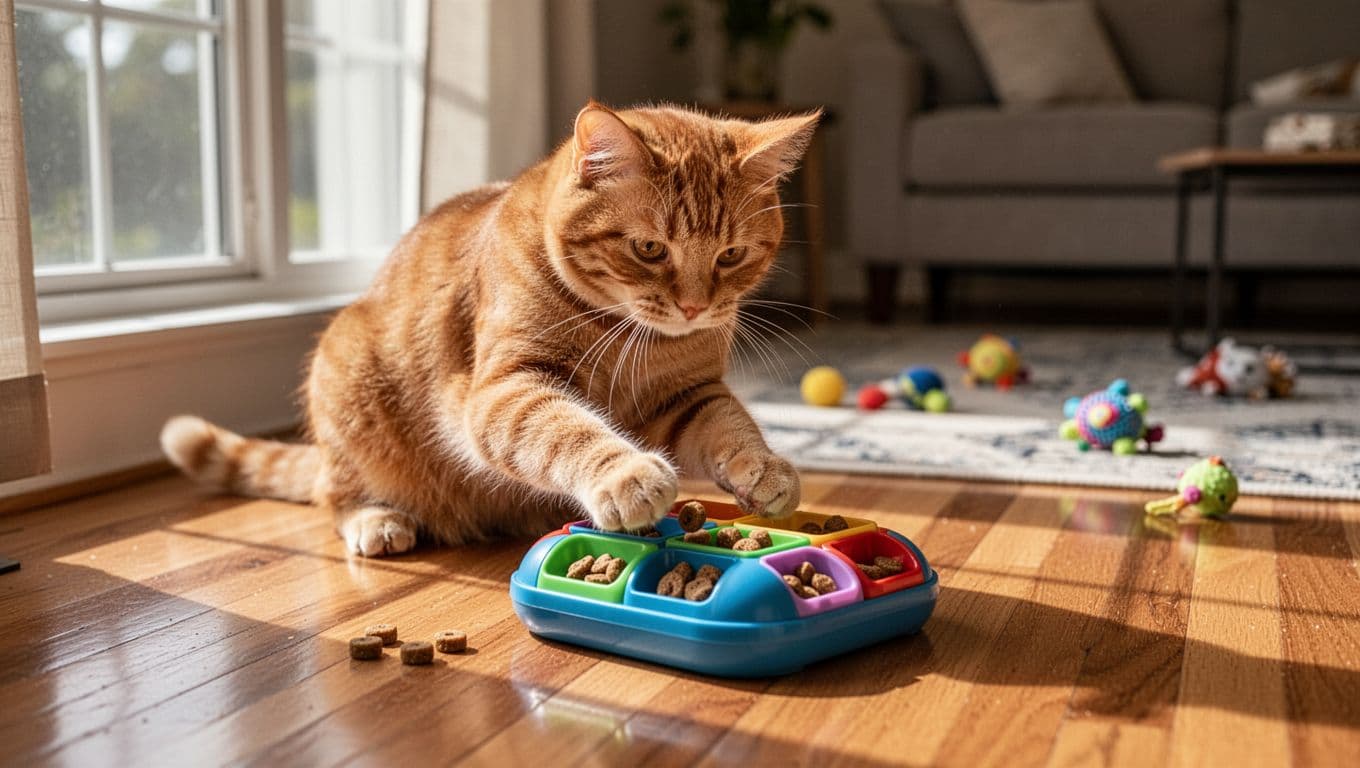 Puzzle feeding gives cats a “job” that doesn’t involve your drawers, image created with AI.
Also add simple “yes” spaces: A window perch for watching birds, a cardboard scratch pad near the problem area, and a cozy cave bed that scratches the same hiding itch as a cabinet. Some cats love a designated “cat cupboard” like an open cube shelf with a blanket inside. It gives the same den feeling, minus the danger.
When your cat chooses the approved spot, reward it. A tiny treat, a calm “good,” or a quick play moment can shift the routine. Over time, you’re not just blocking behavior, you’re replacing it.
Conclusion
Cats open cabinets for the same reason toddlers do, because it’s interesting and sometimes it pays off. The most reliable fix is a three-step approach: identify the risky cabinets first, install the right latches for your layout and cat’s determination, then reduce temptation with better storage, cleaner scent cues, and daily enrichment.
Start small today. Pick one problem cabinet, secure it well, and remove the reward. After that, expand to the next hot spot. A week of steady changes often makes a bigger difference than buying five kinds of locks.
If your cat’s cabinet obsession feels extreme, or it comes with other stress signs, talk with your vet or a qualified behavior pro. The goal is a home that’s both safer and calmer, for you and your cat.