
Cats are quiet sufferers. They don’t usually pant, and they’re experts at slipping away to nap in a corner when something feels off. That’s why heatstroke in cats can be easy to miss until it’s serious.
Heatstroke is also a true emergency. A cat’s normal temperature is about 101 to 102.5°F. When it climbs into the 104 to 105°F range, the body can’t cool itself well anymore, and organs can start to suffer.
This guide keeps things practical. You’ll learn how heat exhaustion differs from heatstroke, which cats are at higher risk, the warning signs from subtle to severe, what to do right away, what the vet may do, and how to prevent overheating during heatwaves, humidity, and even power outages.
Heatstroke vs heat exhaustion, and why cats are harder to read than dogs
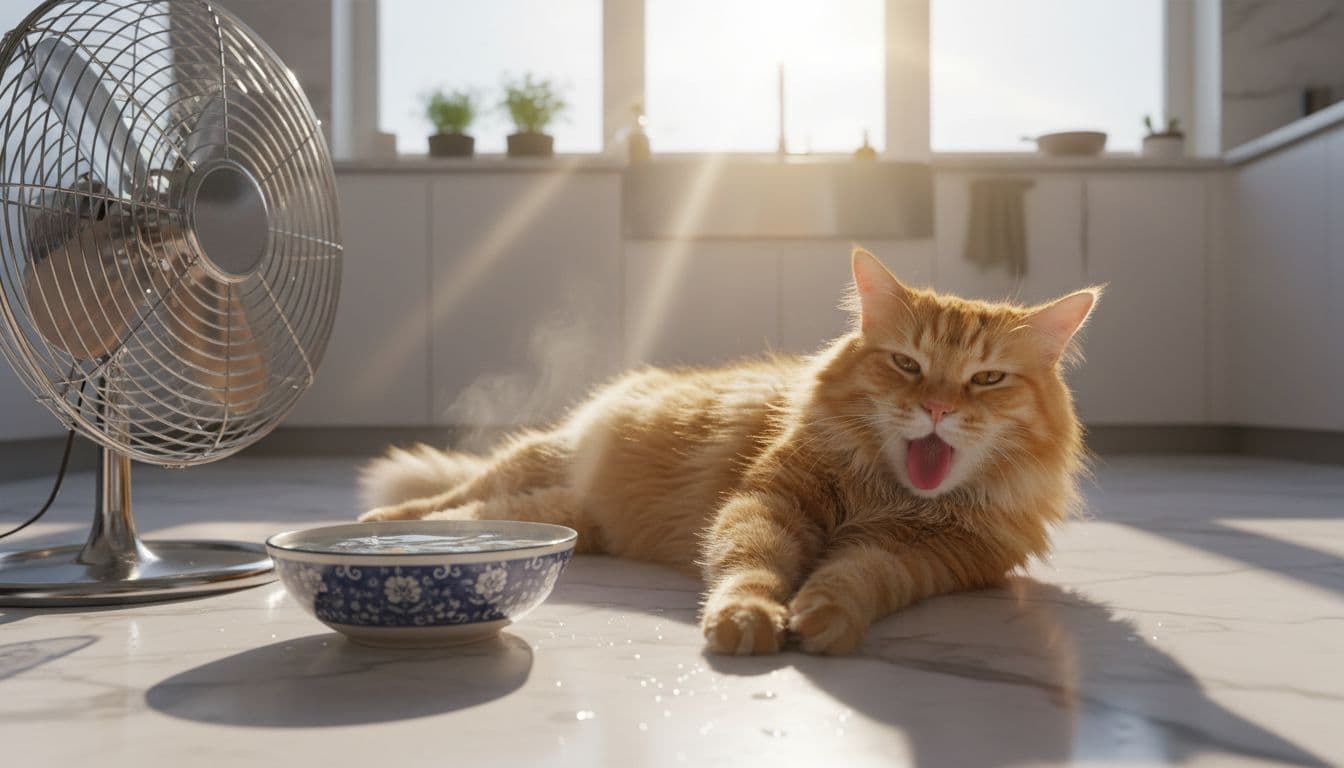
Photo by AI GeneratedPhoto by AI Generated
An overheated cat resting on a cool surface near airflow and water, created with AI.
Think of overheating like a car engine that’s running too hot. At first, it’s a warning light. If you keep driving, it becomes engine damage.
Heat exhaustion is the early stage. Your cat’s temperature rises, they feel unwell, and they’re struggling to cool down. At this point, cooling and fast action can stop things from getting worse.
Heatstroke is the dangerous stage. The body can’t control temperature anymore. As a result, inflammation ramps up, blood pressure can drop, and organs (especially the brain, kidneys, and liver) can be harmed. Many vets consider temperatures above about 104°F consistent with heatstroke, especially when symptoms are severe. For a veterinary overview of how heatstroke is defined and treated, see PetMD’s heatstroke guidance for cats.
Cats are harder to read than dogs because their cooling habits look “normal.” Dogs pant early and loudly. Cats usually try quieter tactics first:
Cats groom to spread saliva on fur, then evaporation cools them. They also seek cooler surfaces (tile, tubs, shaded floors) and may sweat a little through paw pads. The problem is that high heat and humidity can overwhelm all of this. When the air is humid, evaporation slows down, so grooming doesn’t cool as well.
Common triggers show up in everyday life:
A cat gets trapped in a hot car, even briefly. Another ends up in a garage or laundry room with poor airflow. Sunrooms and closed bedrooms can heat up like greenhouses. Heatwaves and power outages remove fans and AC, so indoor cats overheat too. Hard play near a sunny window can push a borderline cat over the edge.
Which cats are most at risk in hot weather?
Some cats start closer to the edge, even in a “normal” summer home.
- Flat-faced breeds (brachycephalic), like Persians and Himalayans: narrower airways make heat release harder.
- Older cats: they may have weaker heart and kidney reserve.
- Kittens: they don’t regulate temperature as well.
- Overweight cats: extra insulation traps heat.
- Cats with heart or breathing disease: less ability to compensate under stress.
- Long-haired or thick-coated cats: they can hold heat, especially in humid areas.
- Cats not used to heat: sudden hot spells hit harder than gradual warm weather.
Indoor life helps, but it doesn’t guarantee safety. A closed room, a stuck window, or a broken AC can turn an apartment into an oven.
Warning signs of heatstroke in cats, from subtle to life-threatening
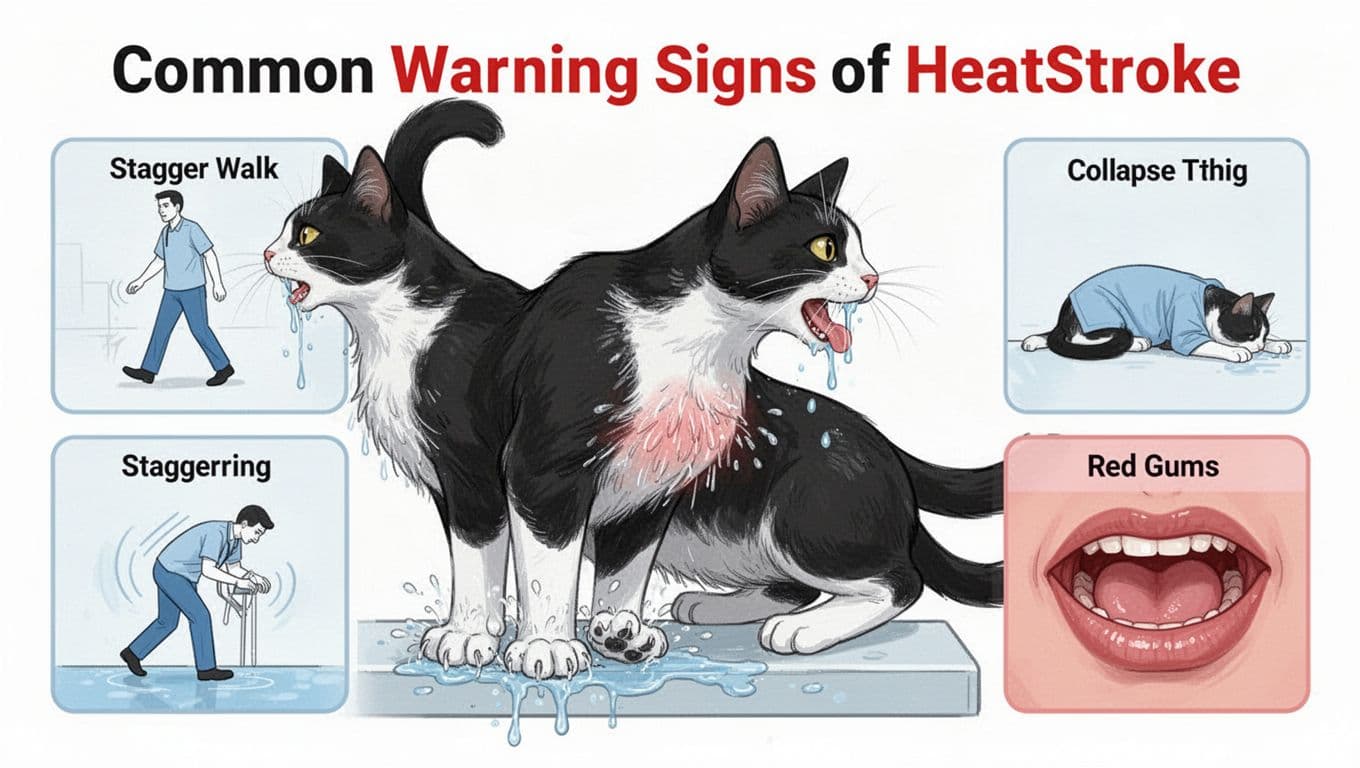
A visual guide to common heatstroke warning signs, created with AI.
With cats, the early signs can look like “weird behavior.” That’s exactly why it helps to know what to watch for.
Early signs (heat exhaustion stage)
You might see restlessness first. Your cat may keep getting up, moving, and re-settling, like they can’t get comfortable. Some cats hide, while others cling to cooler spots like the bathtub or kitchen tile.
Physical clues can show up too. Watch for rapid breathing, drooling, or a slightly open mouth. Paw pads may feel damp, which can look like sweaty paws on a smooth floor. Some cats groom more than usual because they’re trying to cool themselves down. Digestive upset also happens, so vomiting or diarrhea can be part of overheating, not just a stomach bug. For a symptom-focused rundown, see Great Pet Care’s heat stroke signs in cats.
Severe signs (heatstroke emergency)
Once heatstroke sets in, the signs get scary fast. A cat may stagger, seem confused, or act “drunk.” You might notice weakness, collapse, or an inability to stand. Some cats develop tremors or seizures as the brain overheats.
Breathing can also change. Loud, persistent panting, strained breaths, or gasping are urgent. Gum color can shift to bright red from overheating, or go pale if shock is developing. In severe cases, you may see blood in vomit or stool.
If your cat is panting and it’s not from a brief stress event, treat it as urgent, especially in warm rooms or after sun exposure.
A rectal thermometer can help, but only if it’s safe for you and your cat. If they’re struggling, don’t wrestle them for a number. Also, symptoms matter as much as temperature. Collapse, seizures, or trouble breathing always mean emergency care.
A quick temperature guide that helps you decide how urgent it is
Use this as a simple reference if you can check a temperature safely.
| Cat temperature (°F) | What it can mean | What to do |
|---|---|---|
| 101 to 102.5 | Normal range | Keep monitoring if behavior is odd |
| 103 to 104 | Concerning overheating | Start gentle cooling, call your vet for advice |
| 104 to 105+ | Emergency risk zone | Cool while leaving for ER, go now |
Even without a thermometer, act fast if your cat looks disoriented, collapses, or can’t breathe well.
What to do right away (and what not to do) if you think your cat has heatstroke

Safe at-home cooling steps while preparing to leave for emergency care, created with AI.
When it comes to feline heatstroke, home care is only a bridge to the vet. Your goal is to lower temperature safely and get professional treatment quickly.
Here’s a clear order of operations:
- Move your cat to a cooler place right away (indoors, shade, AC).
- Increase airflow with a fan or open vent, but don’t aim intense air at a panicking cat.
- Apply cool, not ice-cold water to the fur and paws. A damp towel works well. Focus on paws, belly, and inner legs.
- Use a fan over damp fur to speed evaporation. This often cools better than soaking alone.
- Offer small sips of water only if your cat is alert and swallowing normally.
- Leave for the vet or ER immediately, even if your cat seems better after a few minutes.
For more detailed first aid guidance from a veterinary education source, review Veterinary Partner’s heatstroke first aid instructions.
Dangerous mistakes to avoid
Cooling can backfire if it’s too aggressive or if it delays treatment.
- Ice baths or ice water: they can constrict blood vessels and slow heat release. They can also trigger shivering, which generates more heat.
- Ice packs directly on the body: they can over-cool the skin while core temperature stays high.
- Forcing water: a weak or confused cat can choke or aspirate.
- Waiting to “see if they improve”: heat injury keeps unfolding inside the body.
- Rubbing alcohol on paws or skin: it can irritate skin and be risky if licked.
If you’re driving to an ER, keep cooling gentle in the car. Keep airflow on, and keep your cat calm and secure in a carrier.
What the vet may do, and what recovery can look like
At the clinic, the team will focus on controlled cooling and organ support. Vets often use IV fluids to rehydrate and help circulation. They may give oxygen if breathing is strained. Blood tests help check kidney and liver function, electrolytes, blood sugar, and signs of clotting problems.
Some cats need meds for shock, nausea, or gut protection. Others need close monitoring of temperature and blood pressure for hours. Depending on severity, hospitalization can last 1 to 3 days (sometimes longer if complications show up). For a practical overview of what treatment can involve, see UrgentVet’s guide to signs, treatment, and prevention.
Recovery depends on how hot your cat got and how long they stayed hot. Many cats do well with fast care. Still, some develop lasting issues, especially kidney problems. At home, plan for a cool room, quiet rest, and a follow-up visit if your vet recommends it. Call your clinic if you notice vomiting, poor appetite, weakness, or hiding that doesn’t improve.
How to prevent heatstroke in cats during summer, heatwaves, and power outages
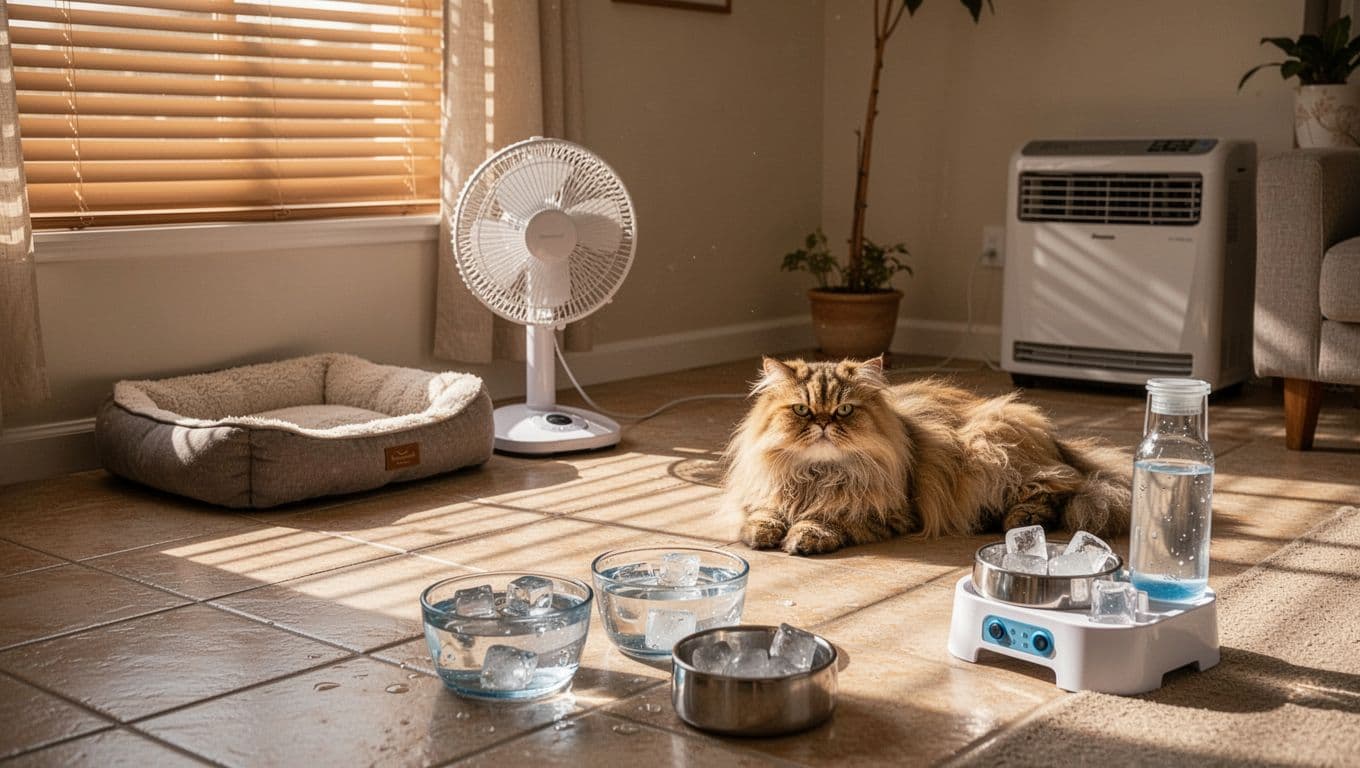
A cool, shaded indoor setup with water stations and airflow, created with AI.
Prevention is mostly about removing “heat traps” from your cat’s day.
Start with the obvious rule: never leave a cat in a car, even with windows cracked. Next, look around your home like a cat would. Sunrooms, closed bedrooms, and upstairs spaces can run much hotter than the thermostat suggests.
Keep your cat inside during the hottest hours, especially during heat advisories. Set up multiple water stations, because one bowl can get warm fast. Offer cool resting spots like tile floors, shaded bathrooms, or a bed placed near safe airflow. Closing blinds on sun-facing windows can drop the room temperature more than you’d expect.
If your cat likes play, change the schedule. Do active play in the early morning or late evening, not mid-afternoon. Also watch humidity, not just temperature. Humid air makes it harder for cats to cool through grooming.
Power outages deserve their own mini-plan. If AC goes out, move your cat to the coolest room (often a shaded lower level). Use battery-powered fans if you have them, and refresh water often. Some cats will lick condensation or chew ice, so you can add a few ice cubes to water if your cat tolerates it. Check high-risk cats more often, and don’t assume they’ll “self-manage” the heat.
For general extreme-heat safety reminders that apply to both cats and dogs, see these summer heatstroke prevention tips.
Conclusion
Cats can overheat faster than many people think, and the early signs can be easy to shrug off. If you remember just a few things, make them these: panting in cats is unusual, safe cooling buys time but doesn’t replace a vet, and prevention is far easier than treatment.
Save your closest emergency vet number in your phone today. Make a simple heatwave plan for your home, especially for humid days and power outages. If your cat shows panting, collapse, confusion, or a very high temperature, treat it as an emergency and go in right away.